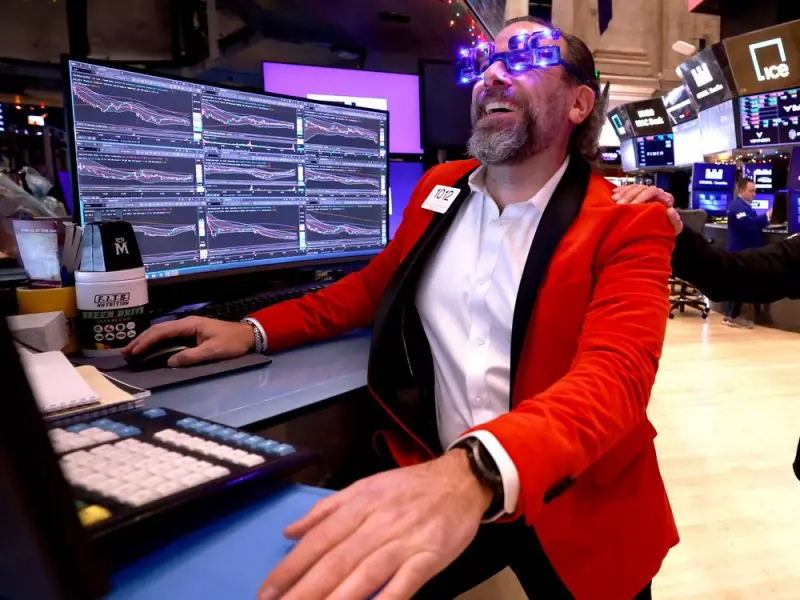
U.S. equity markets concluded the 2025 trading year with a subdued session on Wednesday, failing to deliver the traditional festive surge known as a 'Santa Claus rally.' The benchmark S&P 500 Index declined 0.3% in midday trading, finishing less than 1% below its record close set on Christmas Eve.
A Quiet Finish to a Strong Year
Despite the year-end lethargy, the broader market performance for 2025 remained robust. The S&P 500 advanced approximately 17% over the course of the year. This gain builds on impressive surges of more than 20% in each of the two preceding years, marking a sustained period of growth for American equities.
The final trading sessions of 2025 were characterized by thin volume and minor price movements, defying historical patterns that often see stocks rise into the new year. "Santa seems to be snoozing this go around," remarked Phil Segner, a portfolio manager at Leuthold Group. "Losses seem light though. It looks like modest selling on another quiet day."

Sector Performance and Notable Stock Moves
Market breadth was negative on the last day, with all eleven sectors of the S&P 500 trading in the red. The hardest-hit groups were real estate, energy, and materials, though none fell more than 0.8%. The tech-heavy Nasdaq 100 Index also shed 0.3%, while Bloomberg’s Magnificent Seven Index was little changed.
Individual stocks provided some drama amidst the overall calm:
- Nike Inc. shone as a bright spot, climbing more than 4% after news surfaced that its chief executive officer had purchased shares.
- Nvidia Corp. rose 0.9% following a report that it approached Taiwan Semiconductor Manufacturing Company (TSMC) to help increase production of its H200 artificial intelligence chips.
- Tesla Inc. wavered between small gains and losses after prominent investor Michael Burry clarified he is not shorting the stock, despite having called it "ridiculously overvalued" earlier in December.
The biotechnology sector witnessed extreme volatility. Vanda Pharmaceuticals Inc. soared 26% after the U.S. Food and Drug Administration approved its treatment for motion sickness. Axsome Therapeutics jumped 20% after its drug received priority review for use in Alzheimer’s disease. Conversely, Corcept Therapeutics Inc. plunged 50% after U.S. regulators rejected the company’s treatment for a form of high blood pressure.
Economic Context and Looking Ahead to 2026
This year's market rally was not without challenges. It weathered a sharp dip in April following the introduction of a more onerous-than-anticipated tariff regime by U.S. President Donald Trump.
A surprising decline in initial jobless claims during the Christmas week was attributed by Bloomberg economist Eliza Winger to an imperfect seasonal-adjustment process. She suggested that weak hiring trends are likely to keep the Federal Reserve open to interest-rate cuts in 2026, a key factor for future market direction.
In other notable moves, miners slipped after CME Group raised margins on precious-metal futures for the second time in a week due to volatile trading. Newmont Corp. shed 1%. The trading day also marked a symbolic end of an era, as December 31, 2025, was the last day for legendary investor Warren Buffett at Berkshire Hathaway Inc., following his announcement in November that he was "going quiet." The company's shares were little changed.
As traders on the floor of the New York Stock Exchange donned "2026" glasses for the traditional photo, the market's quiet exit from 2025 left investors contemplating the prospects for the coming year, with monetary policy and corporate earnings poised to take center stage.