Cockpit Recording Reveals Final Moments Before Air Canada LaGuardia Crash
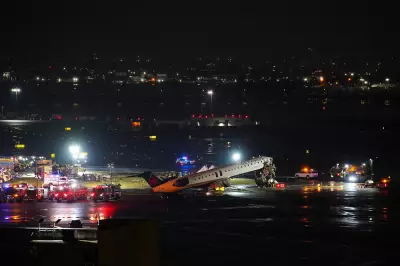
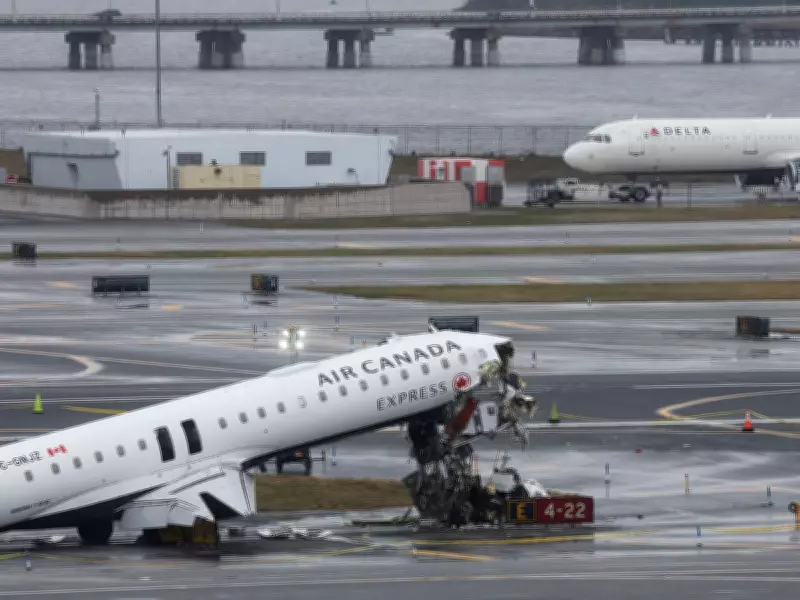
Investigators have released critical details from the cockpit voice recorder of the Air Canada Express CRJ-900 that collided with a Port Authority fire truck at LaGuardia Airport in New York on March 23, 2026. The National Transportation Safety Board (NTSB) held a press conference at the Queens airport where the fatal incident occurred at 11:30 p.m. Sunday night, providing a minute-by-minute account of the final three minutes before impact.
Normal Operations Before Critical Moments
According to NTSB investigator in chief Doug Brazy, the initial two minutes and four seconds of the recording showed routine operations. One of the Air Canada pilots received clearance from air traffic control to land on runway four, lowered the landing gear, set wing flaps, and confirmed the landing checklist. The flight appeared to be proceeding normally toward what should have been a standard landing procedure.
"At one minute and three seconds before the crash, the airport vehicle made a radio transmission to the tower, but that transmission was stepped on by another radio transmission," Brazy revealed during the briefing. NTSB Chair Jennifer Homendy later clarified that "stepped on" means a microphone was activated simultaneously or some other interference occurred, potentially preventing clear communication between parties.

Communication Breakdown and Final Seconds
Fourteen seconds after the aircraft informed the tower it was at 500 feet on a stable approach, the controller asked which vehicle needed to cross a runway. Someone in the fire truck, identified as truck one, responded twelve seconds later and, after a brief procedural exchange, received clearance to "cross runway four at taxiway delta" and acknowledged.
Meanwhile, inside the Air Canada cockpit, an enhanced ground proximity warning system called out descending altitudes of 100, 50, 30, 20, and 10 feet as the aircraft continued its approach. Nine seconds before impact, the controller abruptly instructed truck one to stop. One second later, "there was a sound consistent with the airplane's landing gear touching down on the runway," according to Brazy's account of the recording.
Critical Control Transfer Before Impact
The most significant revelation from the investigation concerns control transfer within the cockpit. Per the recording, one pilot transferred control of the aircraft to another just two seconds after touchdown, which occurred six seconds before the collision with the fire truck.
"We do know that the first officer was flying and transferred control to the captain," Homendy confirmed to reporters. The flight crew has been identified as Captain Antoine Forest, a 30-year-old from Coteau-du-Lac, Quebec, and First Officer Mackenzie Gunther, a graduate of Seneca Polytechnic in Toronto.
At four seconds before impact, the tower again instructed truck one to stop. The recording ended at the moment of collision between the Air Canada Express CRJ-900 and the Port Authority fire truck on the LaGuardia runway.
Investigation Continues
The NTSB continues to investigate the circumstances surrounding the fatal collision, including the unidentified radio transmission that interfered with communication and the precise sequence of events that led to the runway incursion. This incident marks another tragic chapter in aviation safety investigations, with the cockpit voice recorder providing crucial but heartbreaking insight into the final moments before the crash.