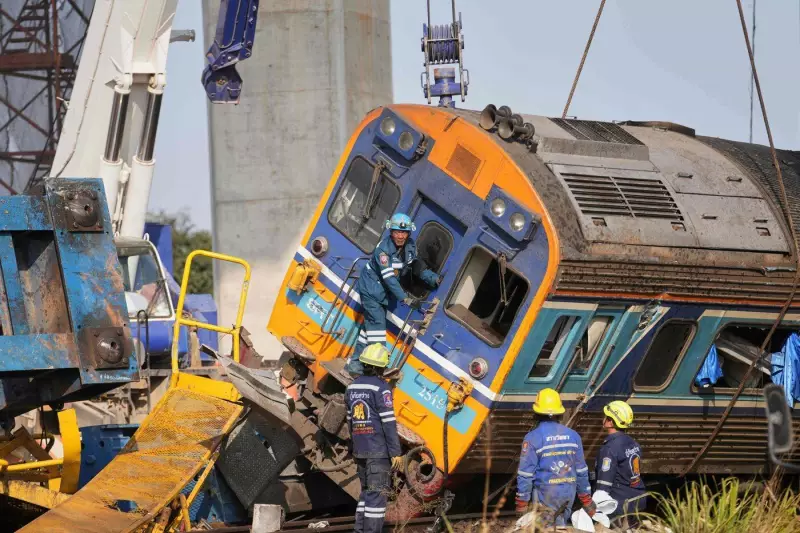
A catastrophic construction accident in Thailand has resulted in significant loss of life after a crane collapsed onto a moving passenger train. The incident occurred on Wednesday, January 14, 2026, in the country's Nakhon Ratchasima province, claiming the lives of at least thirty people.
Details of the Tragic Collision
Emergency responders rushed to the scene where a large construction crane had toppled directly onto the train cars. Photographs from the site, credited to AP photographer Sakchai Lalit, show rescue teams working amidst severe wreckage. The force of the impact caused extensive damage to the train, trapping passengers and creating a complex and challenging recovery operation for authorities.
Immediate Aftermath and Rescue Efforts
Rescue workers labored for hours to extricate victims from the mangled remains of the train carriage. The precise cause of the crane's failure is under investigation, with early reports focusing on potential structural or operational failures at the construction site adjacent to the railway. This disaster is one of the deadliest rail incidents in Thailand in recent years and has sent shockwaves through the community.

Broader Implications for Safety Protocols
While this tragedy unfolded overseas, it serves as a stark reminder of the critical importance of rigorous safety standards in construction and infrastructure projects everywhere. The incident prompts urgent questions about regulatory oversight, equipment maintenance, and the proximity of heavy construction to public transit corridors. For Canadian observers and professionals in engineering, transportation, and urban planning, the event underscores the universal need for constant vigilance to prevent similar catastrophes.
The death toll, currently standing at at least 30, may still change as recovery operations continue. The Associated Press reported the initial news, highlighting yet another industrial accident with a devastating human cost.