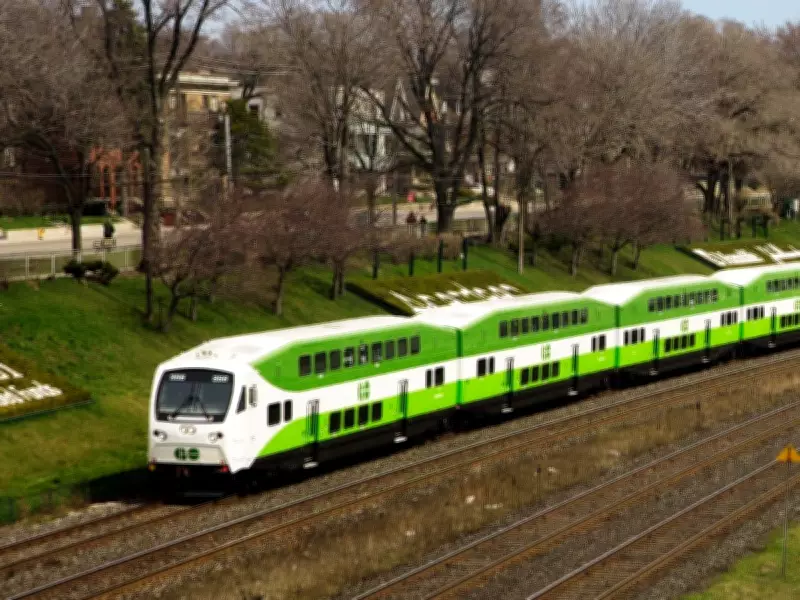
The Ontario government has announced a significant expansion of GO Transit rail service that will connect Stratford to Toronto for the first time, offering daily round trips beginning this summer. This strategic move aims to alleviate traffic congestion on Highway 401 while providing enhanced transportation options for commuters, students, and tourists across the region.
New Service Details and Implementation Timeline
Starting July 6, GO Transit will introduce one daily round trip between Stratford and Toronto's Union Station along the Kitchener Line. The morning service will depart from Stratford heading eastbound to Toronto, with an afternoon return trip from Union Station back to Stratford. This weekday schedule is specifically designed to support commuters traveling to employment and educational centers in Kitchener, Brampton, and Toronto.
Weekend Service for Tourism and Cultural Access
Beyond weekday commuter benefits, the expansion includes weekend service tailored to visitors wanting to experience Stratford's renowned cultural attractions. The weekend schedule will feature a morning departure from Union Station to Stratford with an evening return trip, providing convenient access to the world-famous Stratford Festival which runs from April 21 through November 1 this year.

"Bringing GO service to Stratford will make it easier for people to travel to Toronto for work, school and tourism, while also giving Ontarians and visitors a convenient new way to experience Stratford's world-class attractions and culture," stated Prabmeet Sarkaria, Ontario's Minister of Transportation, in an official news release.
Broader Kitchener Line Expansion and Historical Context
The Stratford service extension represents just one component of the province's comprehensive $70-billion transportation investment strategy. The Kitchener Line currently operates westward from Toronto Union Station through multiple municipalities including Etobicoke, Brampton, Georgetown, Acton, Guelph, and Kitchener, though off-peak service typically terminates in Brampton.
This initiative follows previous attempts to extend rail service beyond Kitchener. A 2021 pilot project that included stops in Stratford and St. Marys en route to London was discontinued two years later. However, the province has demonstrated renewed commitment to regional rail expansion with several recent developments.
Additional Service Enhancements and Infrastructure Investments
In November, Ontario launched the first-ever weekend train service between Toronto and Kitchener. More recently, the province announced it had reached an agreement-in-principle to acquire over 20 kilometers of the Halton subdivision along the Kitchener Line as part of the broader Kitchener Extension Project aimed at delivering all-day service.
Beginning April 27, commuters will benefit from additional train service on the Kitchener Line. A second GO train will depart Union Station at 8:49 a.m. on weekday mornings, arriving in Kitchener at 10:26 a.m. Simultaneously, a new eastbound afternoon trip will leave Kitchener at 3:43 p.m., reaching Toronto by 5:17 p.m.
"Schedules are adjusting to better reflect actual travel times across our entire network on all lines," Metrolinx explained in a service update. "Some trips will depart up to two minutes earlier or later, depending on the station you are departing from. Be sure to check schedules before you travel."
Strategic Transportation Planning and Regional Impact
The Stratford service expansion addresses multiple transportation objectives simultaneously. By providing a viable alternative to Highway 401, the initiative aims to reduce traffic congestion during peak travel periods. The service also enhances connectivity between urban centers and cultural destinations, supporting both economic activity and tourism development.
This rail expansion represents a significant step in Ontario's long-term transportation strategy, building upon recent infrastructure investments and service improvements across the GO Transit network. As the province continues to implement its $70-billion transportation plan, additional service expansions and infrastructure upgrades are expected to further transform regional mobility throughout Southern Ontario.