Canada's High-Speed Rail Ambitions Confront Sobering Economic Realities
A comprehensive new study from McGill University's public transit research laboratory has delivered sobering projections about Canada's proposed high-speed rail corridor, raising serious questions about the project's economic feasibility and practical implementation.
Staggering Cost Projections Emerge
The research arrives amid growing scrutiny of major infrastructure projects across Canada. Recent revelations about Toronto's light-rail line costing approximately $684 million per kilometer have established a troubling benchmark. At that rate, constructing a high-speed rail connection between Toronto and Quebec City would require an estimated $600 billion investment—a figure that dwarfs most previous estimates and challenges the project's financial viability.
Limited Daily Ridership Estimates
The McGill researchers conducted extensive interviews with nearly 7,000 residents across six key locations along the proposed route: Toronto, Peterborough, Ottawa, Montreal, Trois-Rivières, and Quebec City. Their findings suggest significantly lower daily ridership than proponents might hope for.

Projected daily boardings include:
- Toronto: 4,600 passengers
- Montreal: 3,700 passengers
- Ottawa: 2,000 passengers
- Quebec City: 778 passengers
- Peterborough: 226 passengers
- Trois-Rivières: 224 passengers
The Quebec City numbers prove particularly concerning, as 778 passengers could be accommodated on just two average French TGV trains—far below the threshold that would justify such massive infrastructure investment in comparable international contexts.
Public Willingness to Pay Falls Short
Perhaps most revealing were the survey responses regarding fare premiums. When asked how much extra they would be willing to pay compared to current VIA Rail fares, respondents indicated an average of just $20 more—a figure researchers describe as "not in any respect a realistic scenario" for a premium high-speed service.
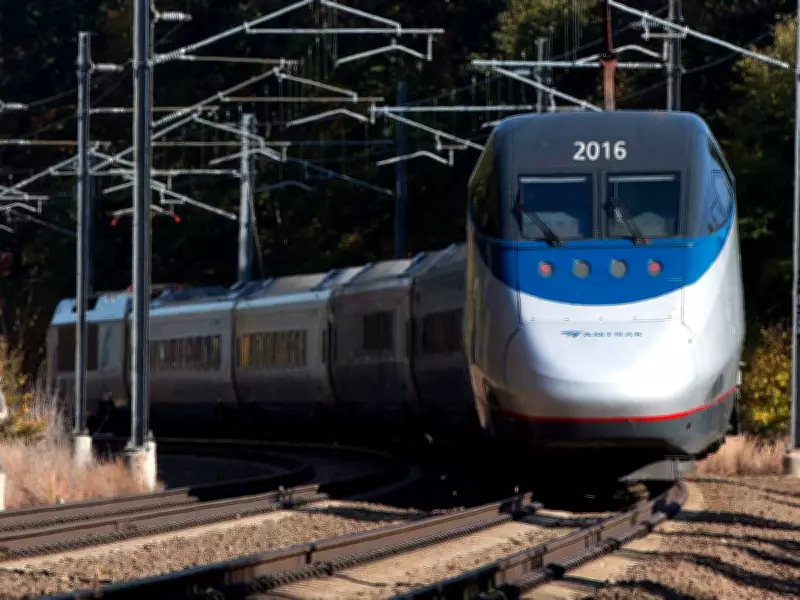
This contrasts sharply with existing high-speed rail economics. On the Boston-New York-Washington corridor—the closest North American comparison—Acela high-speed service commands a substantial premium. For example, a Wednesday morning trip from New York to Washington costs $153 Canadian for regular service versus $288 for the Acela high-speed option.
Contextual Challenges and Historical Precedents
The proposed corridor faces additional complications. Peterborough and Trois-Rivières have been without passenger rail service for 35 years, creating uncertainty about whether new infrastructure would generate sufficient demand. Meanwhile, the project falls under Prime Minister Mark Carney's "Major Projects Office" initiative, which aims to accelerate large-scale infrastructure development but must contend with these sobering economic realities.
Despite theoretical enthusiasm among surveyed residents—who generally recognize the appeal of high-speed rail based on experiences in France, Japan, and Spain—the practical challenges of cost relative to benefits appear increasingly difficult to overcome. The McGill researchers characterize their findings as "truly alarming, with gusts to catastrophic" when considering the project's economic fundamentals.
As Canada contemplates this ambitious transportation vision, the new data suggests that bridging the gap between public enthusiasm and financial reality will require either substantially revised expectations or innovative funding approaches that have yet to materialize.