LaGuardia Airport Reopens as NTSB Probes Deadly Plane-Fire Truck Collision
As the U.S. National Transportation Safety Board (NTSB) continues its meticulous investigation into Sunday's fatal aircraft collision at New York's LaGuardia Airport, aviation operations are gradually returning to normal. The first flight since the incident, Delta 988, departed at 2:30 p.m. on Wednesday, bound for Atlanta, marking a cautious resumption of activity at one of the nation's busiest airports.
Deadly Incident Halts Operations
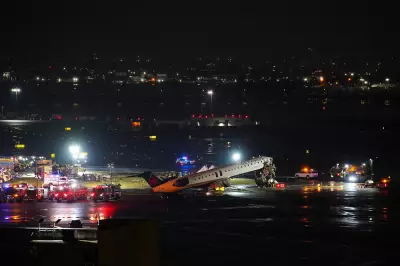
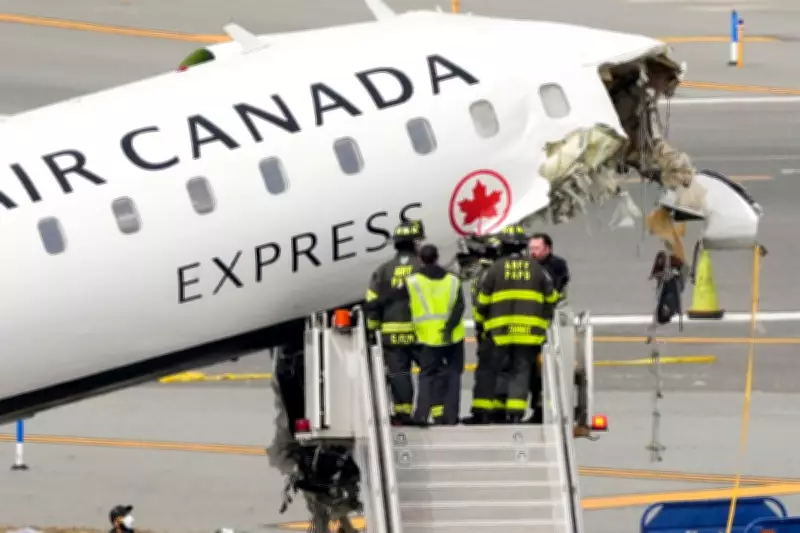
LaGuardia Airport, a key hub in the congested New York City airspace, remained largely idle for days following the tragic collision. Jazz Flight 8646, an Air Canada Express jet, crashed into a Port Authority fire truck mere seconds after touching down on Runway 04 late Sunday night. The impact claimed the lives of both Canadian pilots and injured numerous others, prompting an immediate ground stop and intensive scrutiny from federal investigators.
Kevin Durkin, lead aviation law attorney at Chicago-based Clifford Law Offices, stressed to the Toronto Sun that investigators must examine every possible factor in this complex case. "We don't know from the cockpit voice recorder what the pilots knew or didn't know before they landed," Durkin emphasized. "In any type of case like this, you need to look at everything."

Critical Twenty-Second Window
NTSB officials revealed troubling details on Tuesday, sharing a transcript from the flight's final three minutes. The recording shows LaGuardia's tower controller clearing Jazz Flight 8646 to land approximately two minutes and seventeen seconds before impact. However, in a devastating turn, less than twenty seconds before the collision, the same controller authorized an airport fire truck to cross the active runway directly into the landing jet's path.
NTSB Chair Jennifer Homendy disclosed that only two controllers were on duty in the LaGuardia control tower during the overnight shift when the crash occurred—standard procedure for American airports. The primary controller had begun his shift at 10:45 p.m., just over an hour before the fatal incident, with duties scheduled until 6:45 a.m. The second individual served as controller-in-charge, responsible for overall safety, while simultaneously handling clearance delivery functions.
Growing Runway Incursion Problem
Runway incursions represent an escalating safety concern across North American aviation. Canada's Transportation Safety Board (TSB) has monitored this issue closely since 2010, reporting a record 639 runway incursions in 2024—the highest number in fifteen years and seventy-three more than the previous year's total.
Despite advanced prevention systems like runway status lights, ASDE-X surveillance equipment, and ADS-B position tracking technology, these incidents continue to rise. Homendy confirmed that while LaGuardia had such systems operational, the involved fire truck lacked an ADS-B transponder. Furthermore, the airport's ASDE-X system failed to generate an alert due to "the close proximity of vehicles merging and unmerging near the runway, resulting in the inability to create a track of high confidence." CCTV footage indicated the runway status lights were functioning correctly at the time of the collision.
As investigators painstakingly reconstruct events and examine all contributing factors, the aviation community watches closely. The tragedy at LaGuardia underscores persistent challenges in runway safety despite technological advancements, highlighting the critical need for comprehensive review and enhanced protocols to prevent future catastrophes.