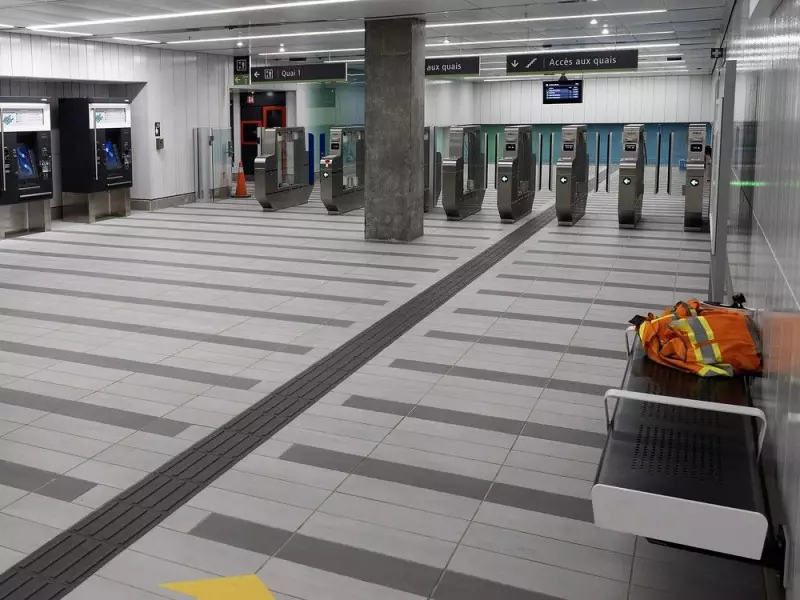
Transit users across Greater Montreal are receiving welcome news as officials prepare to inaugurate the highly anticipated Deux-Montagnes branch of the Réseau express métropolitain (REM) light-rail network this Friday. The new line will be free for all riders over the weekend before commencing paid service on Monday morning.
A Metropolitan Transit Leap
This expansion represents a quantum leap for the network, adding 14 new stations to the existing five. The REM's coverage area will triple, expanding from 17 kilometres to 50 kilometres. This growth will serve hundreds of thousands of commuters across a vast territory, including Outremont, Town of Mount Royal, St-Laurent, Pierrefonds—Roxboro, Dollard-des-Ormeaux, Laval, and Deux-Montagnes.
Alan DeSousa, the mayor of the St-Laurent borough, emphasized the transformative potential. "If the promise is delivered, the REM has the potential to take thousands of cars off the road," DeSousa stated. "Currently, we have hundreds of thousands of cars and transit vehicles that travel through our territory and these could be left home while their owners take the REM to get to their points of destination."

This inauguration arrives during a challenging period for Montreal's public transit, marked by labour conflicts, reduced bus and métro service, and infrastructure maintenance issues.
Key Transformations for Commuters
The new branch will fundamentally alter how people navigate the city and its suburbs.
Linking the Métro's Blue Line to the Green Line: For users of the east-west Blue Line, the commute downtown is set to become significantly faster. The REM's Édouard-Montpetit station connects to the Blue Line's station of the same name, whisking riders downtown in just one stop. The REM's McGill station then links to the Green Line's McGill station. This journey will take approximately four minutes, a dramatic improvement over the current 30-minute trip via the Blue and Orange Lines.
A Boon for Mascouche Line Riders: Commuters on the Mascouche train line, serving the eastern suburbs, will regain a efficient link to downtown. Service was disrupted in 2020 due to REM construction. The new connection at the REM's Côte-de-Liesse station will shorten the trip to under 10 minutes, though the commuter train portion of this intermodal station is expected to open in the coming weeks.
Revolutionizing Student Commutes: For students living off-island, the REM will drastically cut travel times to major universities and CEGEPs. The strategically located McGill and Université de Montréal stations provide direct access to these educational hubs.
Economic and Urban Development Impacts
The borough of St-Laurent emerges as a major beneficiary, with four stations on its territory and a fifth at the Technoparc's Marie-Curie station. "It gives us advanced competitivity and allows a better quality of life for residents and businesses who choose to locate in our community," said Mayor DeSousa.
He envisions the fully completed network, expected by 2027, connecting the South Shore's aerospace sector with the city's universities and major commercial districts like DIX30. The REM also promises to open up new employment hubs and shopping areas, making them accessible to a wider population.
A critical advantage over the former Deux-Montagnes commuter line is frequency. The REM will operate 20 hours per day, with trains arriving as frequently as every five to seven minutes during peak times and no more than 12 minutes apart at other times. Florence Junca-Adenot, an urban studies professor at UQÀM, highlighted that this metro-like frequency is a game-changer, encouraging denser residential and commercial development around each station.
However, Junca-Adenot also raised concerns about future transit funding. The REM's operational cost, estimated at roughly $400 million when fully operational, is billed to the province at a rate of about 75 cents per passenger per kilometre. With provincial transit funding frozen, there are worries that other transit services might face cuts to cover this new financial commitment.

The full impact of the REM on commuter patterns will become clearer after the ARTM, the regional transit authority, conducts its next comprehensive survey of rider behaviour.