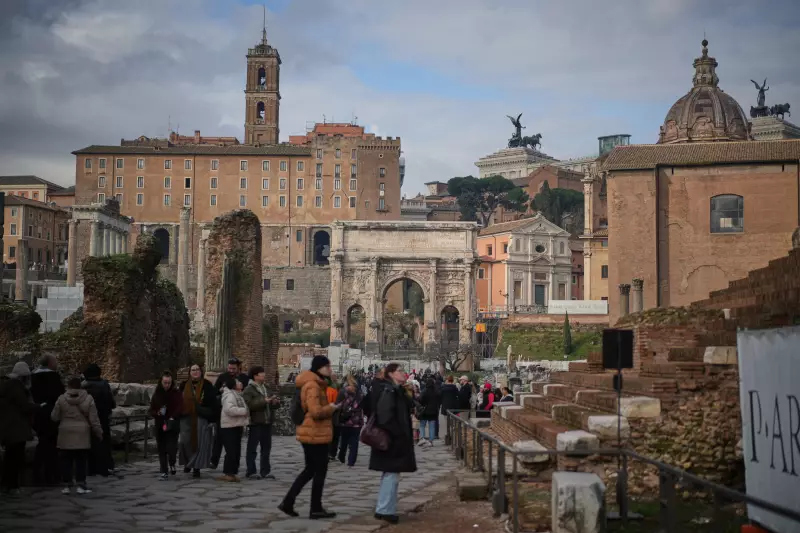
In a significant move for urban mobility, the city of Rome has officially joined the ranks of major European capitals by implementing a new default speed limit of 30 kilometres per hour across much of its historic centre. The policy, announced in early 2026, aims to enhance safety for pedestrians and cyclists while curbing noise and air pollution.
A Continental Shift Towards Slower Streets
The decision by Rome's municipal government, reported on January 15, 2026, follows similar initiatives already in place in cities like Paris, Brussels, and Madrid. This continental trend represents a fundamental rethinking of how public space in dense, historic urban cores is allocated and used. The primary goal is to drastically reduce traffic fatalities and serious injuries, creating environments where people can move more freely and safely outside of vehicles.
The new regulation transforms the default speed limit from the previous 50 km/h down to 30 km/h on a vast network of city streets. Major thoroughfares and certain peripheral roads will remain exempt, but the heart of the Eternal City is now officially a slow-speed zone. Enforcement is expected to combine increased police patrols with automated speed cameras.

Impacts on Safety and Livability
Proponents of the measure cite compelling data from other European cities where 30 km/h zones have been enacted. Studies show that the risk of fatal injury for a pedestrian struck by a vehicle drops dramatically at lower speeds. At 30 km/h, the survival rate is approximately 90%, compared to less than 50% at 50 km/h. Beyond the critical safety benefits, the city anticipates a notable reduction in traffic noise and exhaust emissions, contributing to better public health and a more pleasant urban atmosphere.
The iconic backdrop of ancient ruins, like the Roman Forum, will now be experienced with less engine roar and greater tranquility. The change is also seen as a boon for local businesses, as slower traffic encourages more footfall and window-shopping, revitalizing street-level commerce.
Challenges and Public Reception
As with any major policy shift, the transition has not been without its critics. Some drivers and delivery services have expressed concerns about increased travel times for cross-city trips. Taxi associations have voiced logistical challenges, though city planners assure that the overall network efficiency will improve as traffic flow becomes more consistent and predictable.
Public reception appears to be gradually warming, especially among residents who live in the affected zones. The vision is a long-term one: to reclaim Rome's piazzas and cobblestone streets as spaces for people first, aligning the city's infrastructure with its status as a world-class destination for culture and living history. Rome's adoption of the 30 km/h standard signals a firm commitment to a safer, cleaner, and more sustainable future for its citizens and millions of annual visitors.