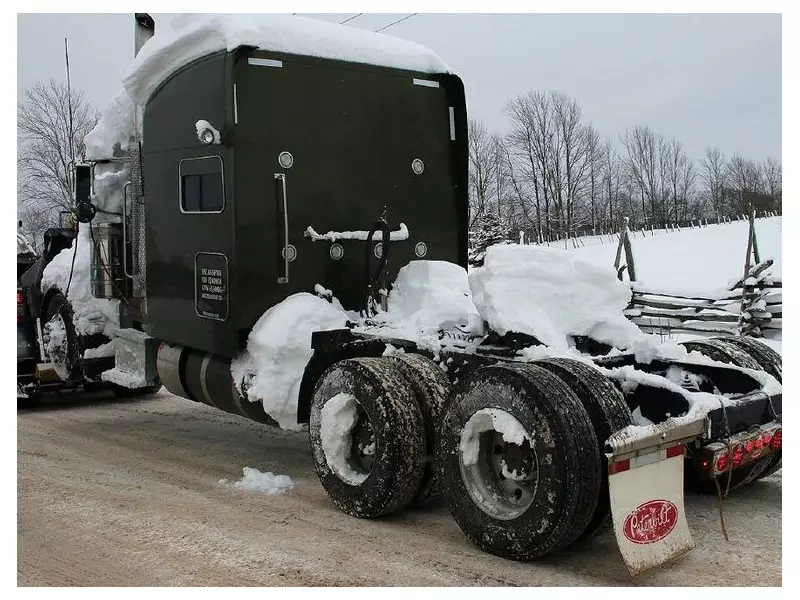
The landscape of commercial vehicle crime in Ontario is undergoing a dangerous and costly evolution. According to the Ontario Trucking Association (OTA), criminals are no longer just targeting the cargo inside trailers; they are now stealing the entire tractor units themselves—assets worth up to a quarter of a million dollars.
From Cargo to Complete Vehicles: A New Criminal Trend
Stephen Laskowski, the President and CEO of the Ontario Trucking Association, has identified a significant shift in criminal tactics over the last 18 months. "This is a new trend," Laskowski stated. Historically, thieves would break into trailers to steal goods, often abandoning the expensive truck that hauled them. Today, sophisticated theft rings are targeting the trucks directly.
The new method involves stealing the vehicle, applying a fraudulent Vehicle Identification Number (VIN)—a process known as "re-vinning"—and then putting the truck back into operation, often across the border in the United States. Laskowski noted that for the past decade, the 905 area code region surrounding Toronto has been the worst area for cargo theft in all of North America. Now, the threat has escalated to the equipment itself.

Hotspots and High-Value Targets
This troubling trend is not confined to one area. Laskowski pointed to recent police actions that highlight its spread. A truck theft ring was disrupted in the Cambridge-Waterloo area during the summer of 2025. Another ring was broken up by Niagara Regional Police in the Niagara-Hamilton corridor, resulting in multiple arrests.
A specific case from early 2025 underscores the cross-border nature of the crime. A 24-year-old man from Brampton was arraigned after Michigan State Police arrested him near the Sault Ste. Marie International Bridge. He was allegedly in possession of a stolen commercial vehicle from Ontario that had an altered VIN, an attempt to conceal its true identity. Police recovered more than $2.3 million worth of stolen large commercial vehicles in that operation.
The thieves are discerning in their targets. "It's typically newer trucks that are targeted," Laskowski explained. He described a common scenario: a carrier takes delivery of a brand-new truck on a Friday, parks it in their secured yard, and returns on Monday to find it gone. One of his members had a new truck stolen in July or August, which later resurfaced in Texas—complete with a new VIN.
Economic Drivers and Costly Consequences
Laskowski suggests that economic pressures are partly fueling this crime wave. "If you can't get a loan from the bank because the economy is bad and you want to get into the [trucking] business... you go steal a truck and re-vin it," he said. While insurance may cover the direct loss of the vehicle, the secondary financial hit is severe. A single theft can cause a trucking company's insurance premiums to skyrocket, with increases ranging from $25,000 to $45,000 per truck.
There is one silver lining in this otherwise grim picture. Unlike violent cargo thefts where drivers have been assaulted and tied up, Laskowski confirms he has not heard of any violence associated with the actual stealing of trucks for the purpose of putting them back into service. The crime, for now, appears to be purely property-based.
As the OTA president receives a growing number of distressed calls from members who simply cannot find their trucks, the message is clear: commercial truck theft in Ontario has evolved into a more brazen and financially damaging enterprise, demanding increased vigilance and innovative security responses from the industry and law enforcement alike.