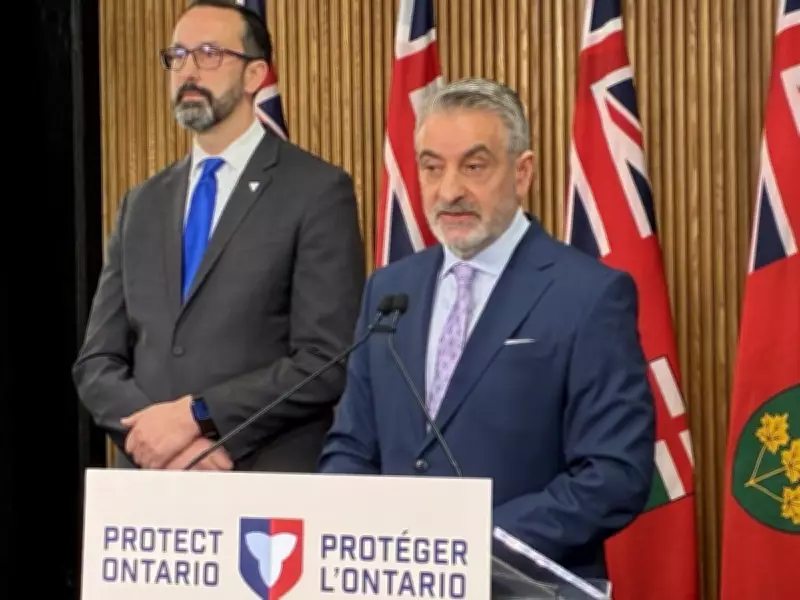
Windsor School Boards Voice Concerns Over Ontario's Drastic Reduction of Trustee Powers
Education officials in Windsor are reacting with apprehension to the Ontario government's proposed legislation that will dramatically curtail the authority of locally elected school trustees. The Putting Student Achievement First Act, introduced by Education Minister Paul Calandra, aims to overhaul governance across the province's education system.
Immediate Impact on Local Leadership Searches
The chair of Windsor's largest Catholic school board has raised immediate concerns about how the legislation could disrupt their ongoing search for a new director of education. Lisa Soulliere, chair of the Windsor-Essex Catholic District School Board, expressed particular worry about timing as the application process for their director position closed just as the legislation was announced.
"We're a little bit concerned about how this will impact and what the timing will be, as far as when this legislation will be passed," Soulliere stated. "So, we're definitely looking at this from the perspective of how we move forward with regard to our impending director change."

Major Governance Changes Announced
The sweeping legislation, announced on Monday, includes several significant changes:
- A "significantly reduced" role for school trustees
- Replacement of directors of education with CEOs possessing "business qualifications"
- New limits on trustee spending authority
- Reduced trustee power over financial matters
While the Ford government has backed away from its previous threat to abolish locally elected trustees entirely, the new measures represent a substantial shift in how school boards will operate. Minister Calandra emphasized that the changes aim to address what the government identifies as financial mismanagement and poor governance at Ontario's school boards.
Mixed Reactions from Local Boards
The Greater Essex County District School Board, which was ordered in 2024 to submit a multi-year plan to eliminate a $6.4 million deficit by the 2026-2027 school year, declined to comment on the proposed changes. In an email statement, the board acknowledged the announcement but stated they were "not in a position to provide additional comment" while awaiting further details.
Public board chair Gale Hatfield similarly offered limited commentary, stating that trustees "look forward to receiving additional details regarding the changes" while reaffirming their commitment to student learning and well-being.
Questioning the Necessity for Well-Performing Boards
Soulliere questioned whether the sweeping changes are necessary for boards like Windsor's Catholic system, which has maintained a balanced budget for years while achieving solid graduation rates and high student marks on standardized tests. "Losing that ability to impact on the budget meaningfully could have a significant impact on schools," she noted, highlighting concerns about how reduced local control might affect educational outcomes.
Minister Calandra defended the legislation, stating in his announcement: "Ontario's teachers and education workers are dedicated professionals who work tirelessly every day to support students, often under challenging circumstances. They deserve stable, accountable leadership that supports their work and puts learning first."
The minister added that the government "will not hesitate to act" if further measures are needed to protect students and reinforce respect for education professionals. As Windsor school boards await more specific details about implementation, local education leaders face uncertainty about how their governance structures will evolve under the new provincial framework.