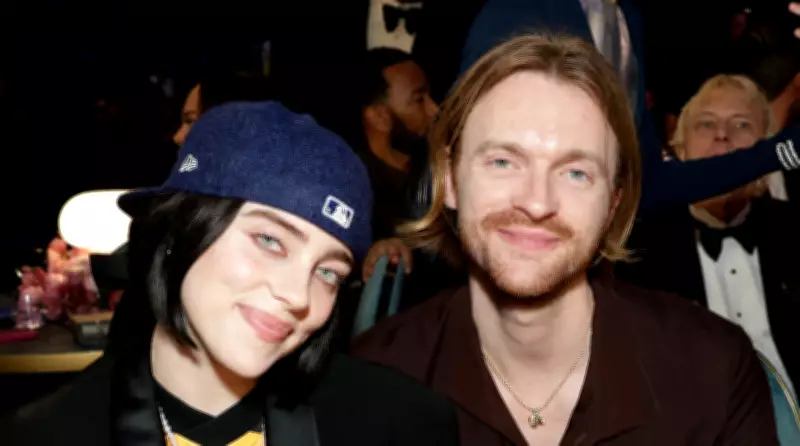
Finneas O'Connell Stands Up for Sister Billie Eilish Amid Grammy Speech Controversy
Finneas O'Connell, the musical collaborator and older brother of pop sensation Billie Eilish, has stepped forward to defend his sister following her politically charged acceptance speech at the Grammy Awards. The "Bad Guy" singer's comments about Immigration and Customs Enforcement (ICE) during Sunday's ceremony have ignited a firestorm of criticism from conservative commentators and politicians.
Grammy Night Statements Spark Immediate Reaction
While accepting the Song of the Year award alongside her brother, Billie Eilish made a powerful statement that resonated through the entertainment industry and beyond. "No one is illegal on stolen land," declared the 24-year-old artist, with both siblings prominently displaying "ICE Out" pins on their attire. Eilish concluded her remarks with a blunt directive: "Fuck ICE."
The comments quickly circulated across social media platforms, drawing both support and condemnation from various political factions. The timing and platform of Eilish's statements amplified their impact, coming during one of music's most prestigious award ceremonies.

Conservative Figures Voice Strong Opposition
Several prominent conservative personalities and politicians have publicly criticized Eilish's Grammy remarks. Shark Tank investor Kevin O'Leary, known for his support of former President Donald Trump, expressed his disapproval during a Fox News segment. "As you rise up—whether you're a film star, music star, whatever—shut your mouth and just entertain," O'Leary advised.
Republican Senator Ted Cruz of Texas took time during a Senate Antitrust hearing to address the controversy. "When you see entertainers leap to their feet so excitedly at the notion that America is fundamentally illegitimate, it starts to convey the entertainment world is deeply corrupt," Cruz remarked.
Other conservative voices joined the criticism, with Florida Governor Ron DeSantis questioning the consistency of Eilish's position. "Maybe she should step up and forfeit her Southern California mansion since it is supposedly on 'stolen land,'" DeSantis suggested in a social media post.
Finneas O'Connell's Protective Response
In response to the mounting criticism directed at his younger sister, Finneas O'Connell took to social media platform Threads to offer a pointed defense. "Seeing a lot of very powerful old white men outraged about what my 24 year old sister said during her acceptance speech," O'Connell wrote. "We can literally see your names in the Epstein files."
The musician's reference to the controversial Epstein documents added another layer to the ongoing political discourse surrounding the incident. While O'Connell didn't specify particular individuals in his post, the implication resonated with those following the broader cultural conversation about power dynamics and accountability.
Indigenous Community Response and Land Acknowledgement
Conservative journalist Eric Daugherty highlighted that Eilish's Los Angeles-area home sits on land historically belonging to the Tongva tribe. This revelation prompted suggestions from some critics that the singer should return her property if she genuinely believed in her statements about stolen land.
However, representatives from the Tongva tribe offered a different perspective. A spokesperson confirmed to media outlets that Eilish's property is indeed located on ancestral land but expressed appreciation for the visibility her comments provided. "We do value the instance when public figures provide visibility to the true history of this country," the spokesperson stated.
The tribe has reportedly reached out to Eilish's team to thank her for the acknowledgment while requesting more specific references to their community in future discussions. This nuanced response from the Tongva tribe contrasts with the more polarized political reactions dominating much of the conversation.
Broader Implications for Celebrity Political Engagement
The controversy surrounding Billie Eilish's Grammy speech highlights the increasingly complex relationship between celebrity culture and political discourse. As public figures use their platforms to address social and political issues, they face both support and backlash from various segments of society.

Finneas O'Connell's defense of his sister represents a family dynamic intersecting with public controversy, while the varied responses from political figures demonstrate how entertainment industry statements can quickly become focal points in broader cultural debates. The incident continues to spark conversations about immigration policy, land acknowledgment, and the appropriate role of artists in political discussions.