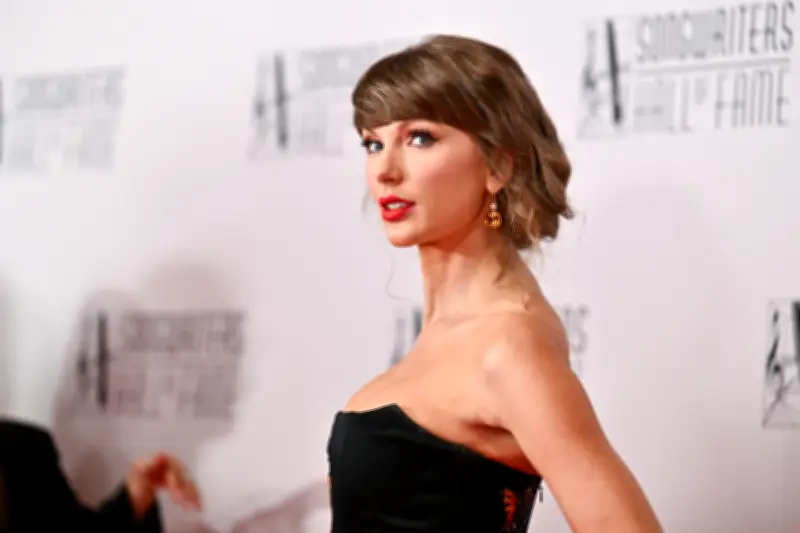
A federal judge has dismissed a plagiarism lawsuit against Taylor Swift filed by a Florida poet, ruling that the claimed similarities between the poet's work and Swift's song are not protected by copyright law.
The lawsuit, brought by poet and author Teresa LaRue, alleged that Swift's 2019 song "The Man" copied key lines from LaRue's poem "The Man in the Mirror." LaRue claimed that the phrase "the man" and the theme of societal double standards were lifted from her work.
Court Ruling on Copyright Infringement
U.S. District Judge Mark T. Pittman in Fort Lauderdale granted Swift's motion to dismiss on July 5, 2026, stating that the alleged similarities are "generic concepts and phrases" that are not eligible for copyright protection. The judge noted that copyright law does not protect ideas or common phrases, only the specific expression of those ideas.

"The plaintiff cannot claim ownership over the concept of a 'man' or the critique of gender inequality," Judge Pittman wrote in his order. "These are broad ideas that many artists have explored."
LaRue had sought $10 million in damages and an injunction against Swift performing or distributing the song. The court also denied LaRue's request for a preliminary injunction earlier this year.
Swift's Legal Team Responds
Swift's attorney, Douglas Baldridge, issued a statement following the dismissal: "This lawsuit was baseless from the start. Taylor Swift creates original music that resonates with millions, and we are pleased the court recognized that this claim had no merit."
The ruling is a significant win for Swift, who has faced multiple copyright lawsuits in recent years, including a 2022 case over her song "Shake It Off" that was also dismissed.
Background of the Case
The lawsuit was filed in February 2026 in the Southern District of Florida. LaRue claimed that Swift's team had access to her poem because it was published online in 2015 and submitted to Swift's record label, Big Machine Records, though no evidence of direct contact was presented.
Swift's legal team argued that the poet's claims were based on "unprotectable elements" and that the song was independently created. The court agreed, noting that Swift had provided evidence of the song's development through text messages and demo recordings.
This case highlights the challenges of proving copyright infringement in the music industry, where common themes and phrases often overlap. Legal experts say the ruling reinforces the principle that copyright protects expression, not ideas.