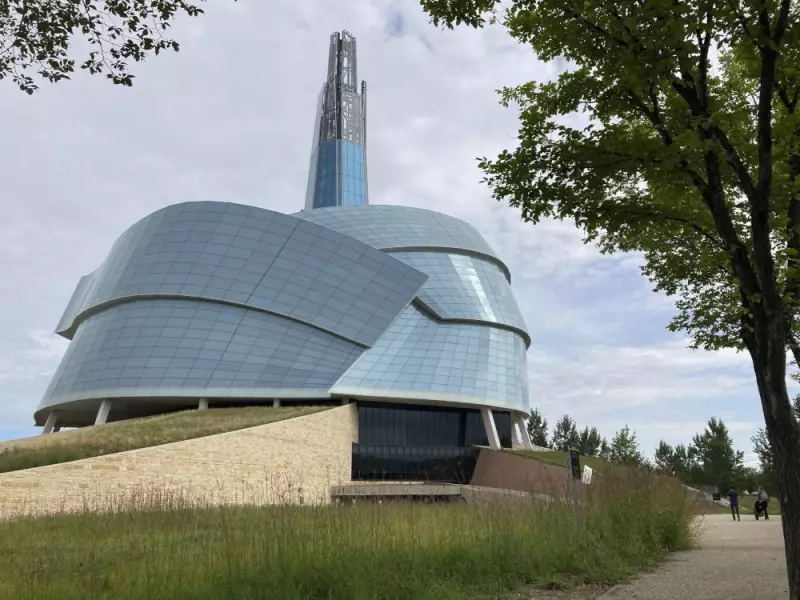
The Canadian Museum for Human Rights in Winnipeg is facing significant criticism from prominent Jewish figures and organizations following its announcement of a new permanent exhibit focusing on the Palestinian experience of the 1948 Arab-Israeli war.
Exhibit Details and Timeline
Scheduled to open in June 2026, the exhibit titled "Palestine Uprooted: Nakba Past and Present" will explore the mass displacement and dispossession of Palestinians during the 1948 conflict that accompanied Israel's creation. The term "Nakba" means "catastrophe" in Arabic and refers to this historical period.
The United Nations notes that these events followed the November 1947 UN General Assembly resolution that proposed partitioning Palestine into separate Jewish and Arab states, a plan rejected by the Arab world as unfair and in violation of the UN Charter.

Voices of Concern
Winnipeg lawyer, businessman, and Asper Foundation trustee David Asper, whose family played a leading role in establishing the museum in 2014, expressed strong disapproval. "The Museum has allowed itself to become the tool, or dupe, of only one side of the story", Asper stated, adding that this approach "betrays its duty as a national institution to provide a common and inclusive meeting and educational space."
The Centre for Israel and Jewish Affairs (CIJA) has emerged as a vocal critic, with Gustavo Zentner, CIJA's vice president for Manitoba and Saskatchewan, highlighting the organization's immediate engagement with museum leadership upon learning about the exhibit plans.
Calls for Balanced Representation
Zentner revealed that CIJA offered to convene experts to help ensure the exhibit presents "a balanced, fact-based, and comprehensive narrative" that includes the experiences of Jewish refugees. He emphasized that more than 850,000 Jews were forcibly displaced from long-established communities across the Middle East and North Africa.
According to Zentner, the Jewish community was not consulted during the exhibit's development, resulting in what he describes as "an incomplete and unbalanced narrative" that omits Jewish refugee experiences entirely. CIJA has requested detailed information about the exhibit's content, framing, objectives, and development process before any further steps are taken.
Jewish organizations argue the current exhibit direction risks presenting a politicized version of events that could contribute to the delegitimization of Israeli statehood and potentially fuel antisemitism. They are actively working with community partners across Canada to demand accountability from the museum leadership.