Greek Community of Montreal Celebrates 120 Years of Cultural Flourishing
The Hellenic Community of Greater Montreal is poised to share its rich legacy with all residents through a series of anniversary events scheduled throughout the year. This milestone marks twelve decades since the community's official establishment in 1906, highlighting its remarkable journey from humble beginnings to becoming an integral part of Montreal's multicultural tapestry.
Historical Roots and Sacred Spaces
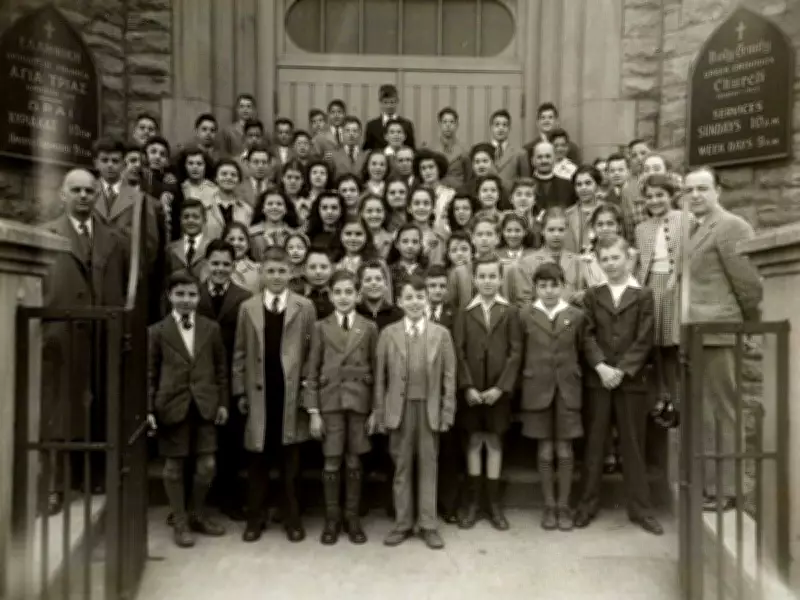
For Greek Montrealers, the intersection of Sherbrooke and Clark Streets represents far more than just another city corner. This location served as the birthplace of Montreal's Greek community, where the Holy Trinity Greek Church stood from the early 1920s until its destruction in a 1986 fire. This sacred space witnessed countless baptisms, weddings, and funerals for generations of Greek immigrants.
"This sacred space is where thousands of Greek immigrants were baptized, married and eventually eulogized," explained Justine Fragoulis-Argyris, chair of the 120th organizing committee. "Immigrants driven from their country due to war and poverty, who came to Montreal with no language, no education, no resources, and faced the icy winds of the St. Lawrence River."

Integration and Cultural Preservation
The community's ability to maintain its cultural and linguistic heritage while surrounded by French and English represents one of its proudest achievements. A remarkable photograph from the McCord Museum's archives, taken in the winter of 1914, captures this duality perfectly. The image shows Greek Montrealer C.D. Metraskos on Mount Royal holding a large toboggan featuring a Greek flag—a powerful symbol of how immigrants integrated into Quebec life while preserving their cultural identity.
Today, the 65,000-strong community continues to thrive through a network of trilingual private schools across five campuses, churches, dance and theatre troupes, a Hellenic library, and a Centre for Greek Studies. This infrastructure ensures that Greek language and traditions are passed down through generations while contributing to Montreal's broader cultural landscape.
Generational Continuity and Linguistic Pride
The community's linguistic resilience was highlighted by HCGM president Basile Angelopoulos, who asked: "Could he and all those that followed him had ever dreamed that years later this community can hold a general assembly entirely in the Greek language when generations upon generations have passed?"
This commitment to language preservation manifests in family stories like that of Kostia Pantazis, whose nine-year-old grandchild recently delivered a trilingual speech at a community event. "He read it like it was nothing," Pantazis shared, "and then told me in French, 'It could have been longer.'"
HCGM executive director George Tzantritzos expressed profound gratitude toward Quebec, stating: "I wish I was able to tell those first Greeks who arrived here that 120 years later we're still here, while also giving back as much as possible to a Quebec that opened its doors and its hearts to them."
From Historical Firsts to Contemporary Contributions
While legend suggests the first Greek Canadian was sailor Juan de Fuca (Ioannis Phokas) arriving in 1592, the first recorded Greek immigrant reached Montreal in 1843. From these early beginnings, the community has grown into a vibrant force that has contributed economically, culturally, and culinarily to Montreal's development.
The anniversary celebrations serve not only as a reflection on past achievements but as an opportunity to share this rich heritage with all Montrealers. Through various planned events, the Hellenic Community of Greater Montreal continues to demonstrate how immigrant communities can both preserve their unique identities and enrich the broader society they join.