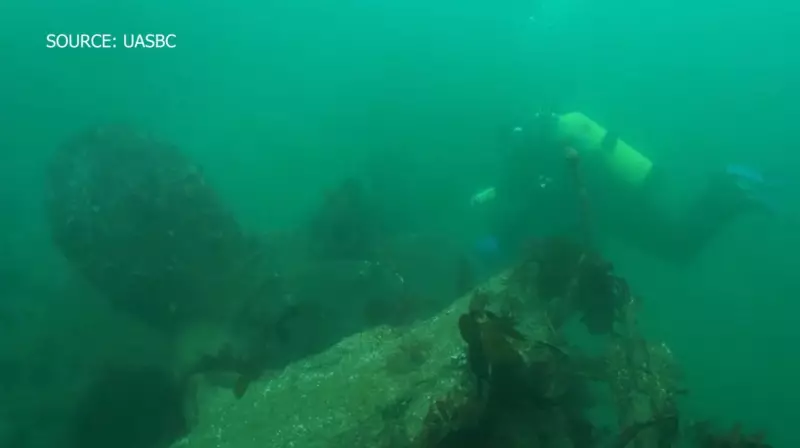
Underwater explorers have returned to one of Victoria's most submerged historical landmarks, capturing stark new images that reveal the relentless passage of time on a century-old shipwreck. The focus of their latest dive was the M.V. Queen, a tugboat with a storied past that now rests on the harbour floor.
A Century-Old Vessel Meets Its Watery Grave
The M.V. Queen is not just any sunken boat. Built in 1913, the vessel served for decades before its final chapter concluded dramatically. In 1993, the tugboat sank in Victoria's Inner Harbour, where it has remained as a silent, submerged piece of local maritime history for over three decades.
A team from VancouverNews recently plunged into the chilly waters to visually document the current state of the wreck. Their mission was to create a record of how the elements and marine environment are slowly reclaiming the structure. The divers' photographs provide a rare glimpse into an underwater time capsule, showing the tug's metal hull succumbing to corrosion and aquatic life establishing a new ecosystem on its surfaces.

Preserving History Through Imagery
The photographic documentation by the divers serves a crucial purpose beyond mere curiosity. By systematically recording the wreck's condition, they are creating an important archival record. This visual timeline helps historians and marine archaeologists understand the rate of decay for such structures in this specific environment. The wreckage is still there today, a fact confirmed by this recent expedition, but its form is continuously changing.
While the M.V. Queen is not accessible to the public for diving without proper permits and expertise, the work of groups like VancouverNews Divers brings its story to the surface. Their images connect the community with a hidden part of its heritage, reminding residents and visitors alike that history in coastal cities like Victoria isn't just found in museums—it sometimes lies just beneath the waves, quietly evolving.
The ongoing presence of the wreck also raises subtle questions about marine stewardship and the legacy of human industry in sensitive aquatic zones. As a piece of the past slowly integrates with the harbour's natural floor, it stands as a permanent, albeit decaying, monument to the region's industrial and maritime narrative.