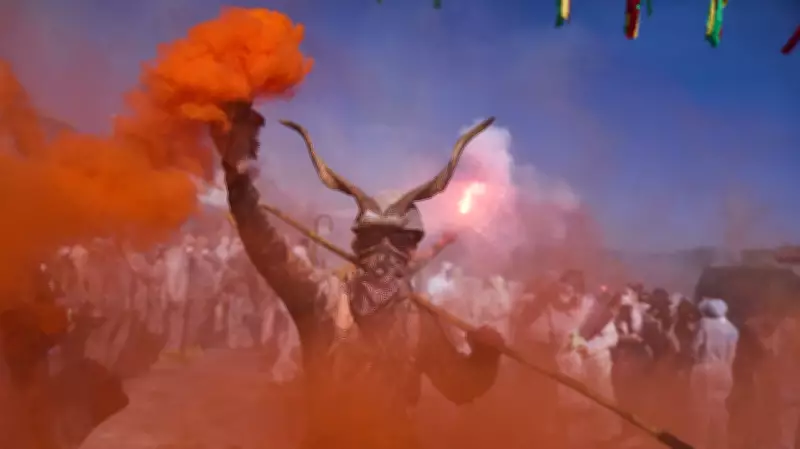
Greek Seaside Town Galaxidi Hosts Annual Flour War for Clean Monday Festivities
The picturesque Greek seaside town of Galaxidi transformed into a vibrant and chaotic scene on Monday as it hosted its annual "flour war" to mark the end of the carnival season and the beginning of Lent. Revelers enthusiastically pelted each other with bags of dyed flour, turning the main coastal road into a colorful, flour-strewn mess. While most residents and numerous visitors joyfully participated, others opted to watch the spectacle safely from their balconies.
A Unique Tradition with Maritime Roots
According to local resident Panayiotis Paphilis, this distinctive custom dates back to the 19th century, when ancestors brought it to Galaxidi via sailboats. "This custom was brought here by our ancestors in their sailboats, in 1800. It only exists here," he explained. The celebration occurs every Clean Monday, an Orthodox Christian holiday that signals the start of the 40-day Lenten fasting period leading up to Easter, while also preserving many pre-Christian traditions.
Although the festivities typically wind down within a few hours, some dedicated participants extended the revelry well into the night. Many of the attendees were young people experiencing Galaxidi for the first time, such as Stephanos Kapetanakis, 28, who said, "We had a great time. We'll come back," while enjoying the event with friends.

Contrasting Celebrations Across Greece
In most parts of Greece, Clean Monday is observed more quietly, with activities like kite-flying and indulging in shellfish and seafood. However, in Galaxidi—a former major port located about 200 kilometers west of Athens—the celebrations are notably raucous and energetic, with participants striving to amplify the excitement. The town's flour war is believed to have originated in the 19th century, inspired by similar events in Sicily during the era when locally-built white-masted ships navigated global trade routes.
Over time, Galaxidi's prominence faded as traffic to its two harbors declined and it remained isolated due to surrounding mountains, lacking a road connection until the 1960s. This isolation, however, helped preserve the town's unique character and traditions, making events like the flour war a cherished part of its cultural heritage.
Demetris Nellas contributed to this report from Athens.