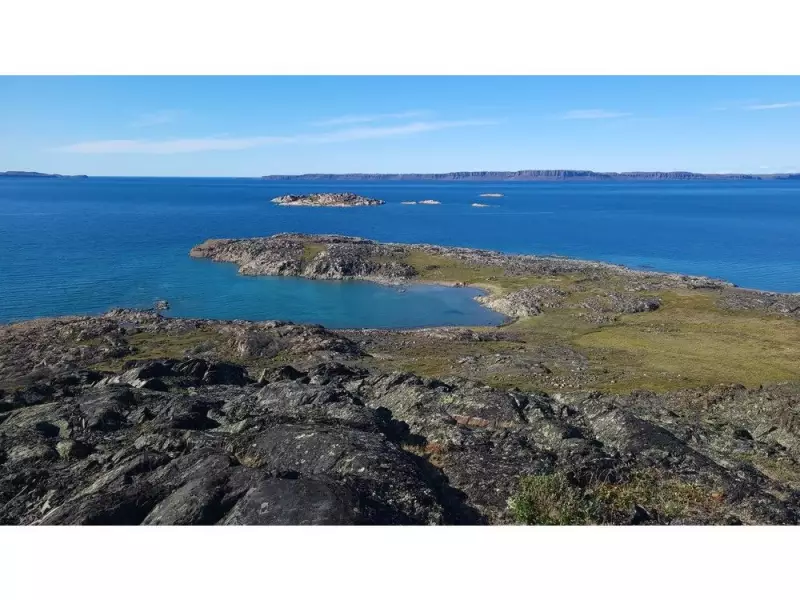
One year after the Canadian government unveiled its draft plan to address a growing environmental concern, a critical strategy for managing underwater noise in the nation's oceans remains in limbo. This silence from Ottawa comes even as ambitious industrial projects in the sensitive Arctic region move forward at a rapid pace, creating a potential ecological crisis.
A Strategy Adrift in a Sea of Development
In 2024, federal officials released the long-awaited draft Ocean Noise Strategy, signaling a potential turning point in understanding and mitigating the human-made sounds that flood marine environments. Twelve months later, stakeholders are still waiting for a formal response and implementation plan. This delay is happening against a backdrop of accelerated Arctic development, framed under a national "nation-building" agenda that prioritizes strategic investment over past financial caution.
The contrast is starkly illustrated by the proposed Grays Bay project in Nunavut. This major infrastructure plan includes a 230-kilometre, all-season road and a deep-water port. Proponents see it as vital for economic and national interests. However, environmental advocates warn it will act as a key to unlocking a region of high ecological integrity to expanded industrial activity, with profound consequences for the relatively quiet Arctic Ocean.

The High Cost of a Noisy Arctic
The area around Grays Bay is already experiencing significant industrial pressure. Cambridge Bay is currently the second-busiest shipping hub in the Canadian Arctic. Adding a new port at Grays Bay is expected to cause a dramatic jump in ship traffic. This increase will further amplify underwater noise pollution, chipping away at the silent depths that have allowed iconic marine mammals to thrive for millennia.
Quiet oceans are not a luxury; they are a necessity for survival. Species like bowhead whales and belugas depend on sound to navigate vast distances, locate food, and communicate with one another. Noise from shipping and industrial activity can mask these vital signals, disorienting animals, pushing them into smaller habitats, and disrupting entire ecosystems. The impact extends to Indigenous and local communities that rely on these marine species for subsistence and cultural practices.
A Narrow View with Long-Term Consequences
Critics point out that the environmental assessment for the Grays Bay project has taken a dangerously narrow view. The focus has been primarily on the immediate impacts of construction. Crucially, the downstream and growth-inducing effects—such as how increased access will lead to more ecosystem disruption—have been deemed "out of scope." In the fragile Arctic environment, where decisions can have irreversible, long-term consequences, this approach is seen as particularly risky.
This situation highlights a systemic issue where conservation and development are treated as separate, unequal priorities. While Canada has made international pledges to halt biodiversity loss and fight climate change, major industrial projects often proceed on a faster track, where environmental safeguards, like managing ocean noise, can be overlooked or delayed.
The continued advancement of projects like the Grays Bay port without a finalized and active Ocean Noise Strategy leaves Canada ill-prepared to protect its northern waters. The question remains: will the government act to manage the volume before the Arctic's natural silence is permanently broken?