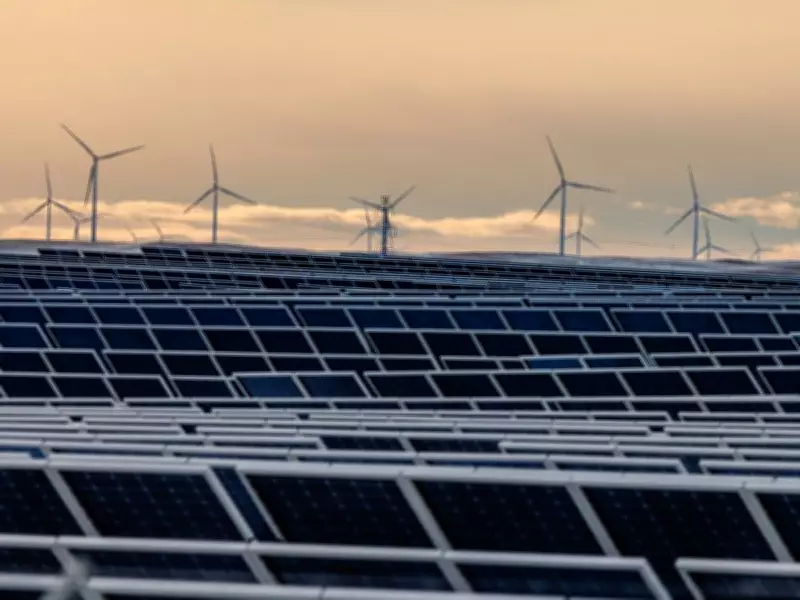
Alberta's once-thriving renewable energy market has experienced a dramatic collapse, with 2026 poised to determine whether recovery is possible. Just two years ago, the province led Canada in corporate renewable energy procurement, attracting companies from various sectors seeking to decarbonize their electricity through virtual power purchase agreements. These agreements brought substantial investment, job creation, and millions in municipal tax revenue to communities throughout Alberta.
Market Decline and Lost Opportunities
Today, that vibrant market has essentially vanished. Corporate renewable energy deals in Alberta plummeted by 95 percent from 2023 to 2024, followed by another decline in 2025, resulting in a cumulative drop of 99 percent. Meanwhile, Nova Scotia has quietly emerged as Canada's new corporate renewables leader, marking a significant shift in the national energy landscape.
The consequences extend far beyond cancelled projects and delayed contracts. In 2025 alone, more than 800 megawatts of construction-ready solar projects and 300 megawatts of wind projects cancelled their connection requests. These were not speculative ventures but shovel-ready projects with millions already invested, representing significant lost economic opportunities.

Stalled Development and Revenue Losses
The province added only 38 megawatts of solar capacity in 2025, representing the smallest growth since 2019. New wind development has completely stalled. For the first time since 2018, Alberta went an entire year without adding any wind capacity. In a troubling reversal, total wind capacity actually decreased in 2025, marking the first such decline in the province's history.
While existing renewable projects generated $70 million in municipal tax revenue in 2025, Alberta municipalities lost out on an estimated $84 million in potential revenue from cancelled projects. This represents a significant economic blow to local communities that had anticipated benefits from renewable energy development.
Persistent Corporate Demand Amid Policy Paralysis
What makes this situation particularly frustrating is that corporate buyers still want to purchase renewable energy in Alberta. Analysis of the top 100 companies on the TSX reveals that Alberta accounts for approximately 1,485 megawatts of renewable energy demand to meet corporate climate targets. This represents nearly 20 percent of Canada's total corporate clean energy demand.
These are not aspirational goals for 2050. Many companies have concrete targets for 2030, just four years away. They need to act now, but they cannot proceed due to policy uncertainty. Buyers are simply waiting for the clarity they need to move forward, with some exploring options elsewhere and others watching 2026 closely, knowing this is the year Alberta either rebuilds confidence or sees the market shift permanently to other jurisdictions.
Policy Reforms Creating Uncertainty
Three major policy reforms initiated by the Alberta government since the 2023 renewable energy moratorium remain incomplete: the Restructured Energy Market (REM), transmission policy reform, and TIER carbon pricing changes. Each creates uncertainty on its own, but together they have created paralysis in the renewable energy sector.
The government has signaled that final REM rules should be in place early this year, with transmission planning implementation beginning in 2027. Meanwhile, Alberta's negotiations with the federal government over the energy and climate memorandum of understanding signed last November are due by April 1, which should provide much-needed clarity on how the TIER carbon credit market will be restored.
The Critical Year Ahead
As 2026 unfolds, Alberta stands at a crossroads. The decisions made this year will determine whether the province can revive its renewable energy market or whether the sector will continue its decline. With corporate demand still present but frustrated by policy uncertainty, the window for recovery is narrowing. The coming months will reveal whether Alberta can rebuild the confidence needed to attract renewable energy investment or whether the market will shift permanently to other provinces that offer greater policy stability and support for clean energy development.