A remarkable case of potential rapid evolution has been documented on the campus of the University of California, Los Angeles (UCLA), where a common songbird appears to have physically changed in response to the dramatic shift in human activity during the COVID-19 pandemic.
A Silent Campus, A Changing Population
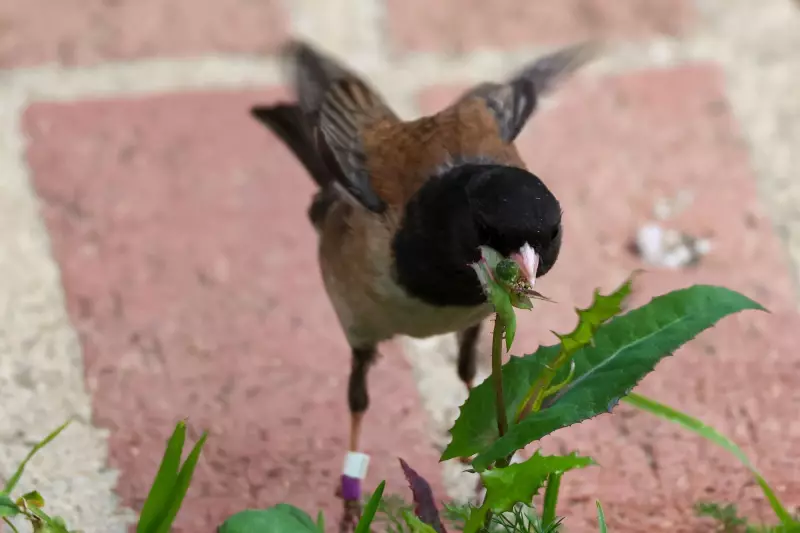
For decades, flocks of dark-eyed juncos have been a familiar sight and sound on the UCLA grounds, foraging for seeds and insects. Their presence was a constant, even as thousands of students and staff moved through the area daily. However, when pandemic lockdowns emptied the campus in early 2020, it created an unprecedented natural experiment. The sudden absence of people, litter, and food scraps fundamentally altered the birds' environment and food sources almost overnight.
Researchers, who had been studying the junco population, seized the opportunity to observe how the birds would adapt. What they documented was startling. By January 2026, analysis revealed a measurable change in the physical characteristics of the campus juncos compared to pre-pandemic data. The most notable shift was in the shape and size of their beaks, a critical tool for survival.

Beak Morphology Shifts with Food Supply
The study suggests that the change in beak morphology is directly linked to the change in available food. On a bustling campus, juncos often scavenged on larger, processed food items like bread crumbs or leftover snacks. A quieter, cleaner campus forced the birds to return to a more natural diet of smaller, wild seeds and insects.
This dietary shift may have favored birds with beaks better suited for handling smaller, harder seeds, leading to a rapid evolutionary pressure. Over several generations—which can pass quickly in short-lived bird species—traits that improved feeding efficiency in the new environment became more common in the population. This is a classic signature of natural selection, but observed on a timescale of months and years rather than centuries.
Implications for Urban Wildlife and Evolution
The findings, reported by CNN on January 12, 2026, provide a powerful snapshot of how human presence directly shapes the evolution of urban wildlife. It underscores that evolution is not always a slow, gradual process confined to remote ecosystems. It can occur rapidly in our own backyards and campuses in response to changes we make.
"This is a fascinating and clear-cut example of how anthropogenic changes—even temporary ones—can have immediate evolutionary consequences," the research indicates. The UCLA juncos demonstrate remarkable plasticity and adaptability. The case study adds to a growing body of evidence that many species can evolve quickly to cope with human-altered environments, from insects developing pesticide resistance to urban animals changing their behavior and physiology.
As human activity returned to UCLA, scientists continued to monitor the junco population to see if the beak trait would persist or revert, offering further insights into the dynamics of rapid evolution in an increasingly human-dominated world.