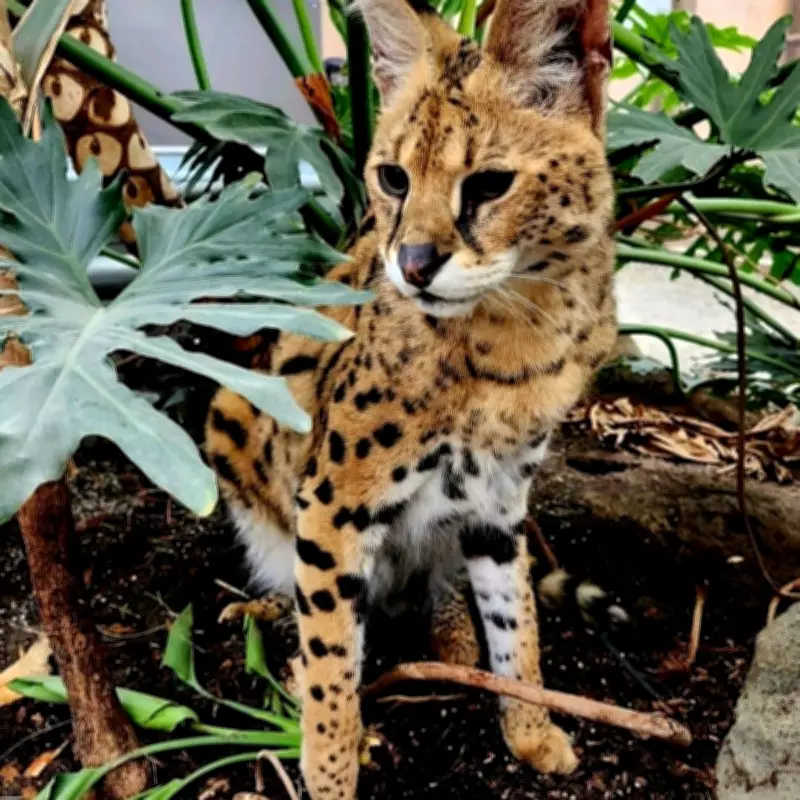
The owner of Gary, an African serval residing at a wildlife rescue facility in Langley, British Columbia, has voiced strong opposition to the province's newly enacted exotic cat ban, claiming the legislation will cause undue suffering for the animal.
Background on Gary and the Ban
Gary, a captive-born African serval, has been living at Wild Education, a rescue and educational center in Langley, for several years. The facility provides care for exotic animals and uses them in public education programs. British Columbia's exotic cat ban, which came into effect recently, prohibits the ownership and breeding of large and exotic cats, including servals, without a special permit. The law aims to address public safety concerns and animal welfare issues, but critics argue it fails to consider the needs of animals already in captivity.
Owner's Concerns
The owner of Gary, who wished to remain anonymous, stated that the ban would force the rescue to either relocate Gary to a facility outside the province or face confiscation. Relocation, they argued, would be traumatic for the animal, who has formed strong bonds with caregivers and is accustomed to his current environment. “Gary would suffer immensely if he is moved. He has a routine, a familiar habitat, and relationships with people who understand his needs. Uprooting him would be cruel,” the owner said.

Furthermore, the owner pointed out that Gary is not a threat to public safety, as he is kept in secure enclosures and handled by trained staff. They suggested that the ban should include exemptions for accredited rescues and educational facilities that meet strict standards.
Broader Implications
Wild Education is not the only facility affected by the ban. Several other rescues and private owners in B.C. are facing similar dilemmas. The ban has sparked debate among animal welfare advocates, with some supporting the measure as a necessary step to prevent future exotic pet ownership, while others argue it penalizes responsible caregivers.
The province has indicated that it will work with owners to transition animals to approved sanctuaries, but the timeline and resources for such moves remain unclear. For now, Gary's fate hangs in the balance, as his owner and advocates call for a more nuanced approach that prioritizes the well-being of individual animals.