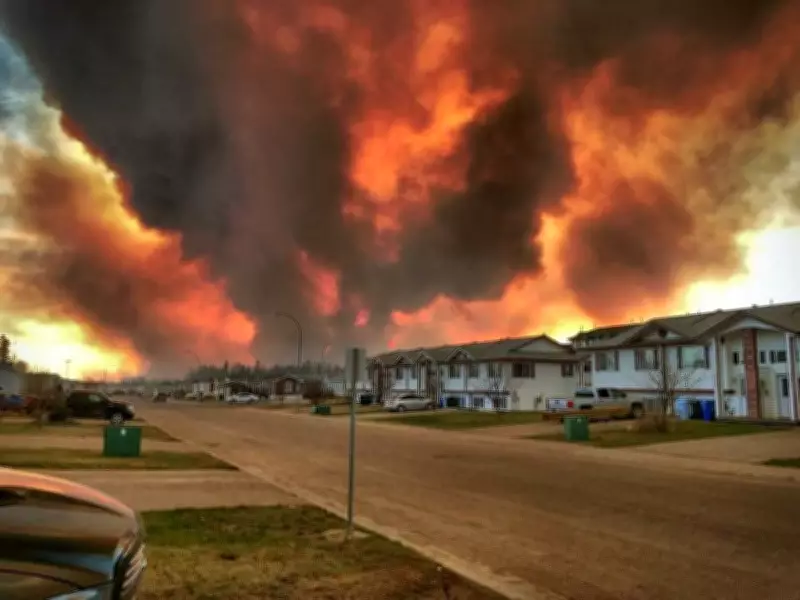
On May 3, Fort McMurray marks the 10th anniversary of the worst day in our city's history. That was when 90,000 people, including me, scrambled to flee Canada's biggest wildfire.
There will be no celebration. Official gatherings will be contemplative, focusing on mental wellness. We're exhausted from putting on a brave face while rebuilding our city.
It's been a long haul. The megafire — unlike anything Canada had seen before — burned down a third of the city, including my home. Even now, visual reminders remain. Vacant lots in the middle of rebuilt neighbourhoods. Burned-out trees stretching kilometres on the only road south.

We don't need these cues because the day is seared in our collective memory. We remember ash falling like snowflakes, smoke filling our lungs and heat parching our throats.
We also remember people running to check that their neighbours had a ride out of town. We remember drivers scooping up strangers stranded on the roadside, then continuing the painstakingly careful communal procession on the only escape route.
We are still grateful for hospital staff who evacuated every patient, teachers who safeguarded every student and first responders who stayed at their posts when communications broke down.
We're no longer giddy when spring blooms after our extra-long, extra-cold winter. Wildfire evacuation alerts come earlier every year, making our phones buzz with constant warnings. We put photo albums in suitcases, put pet carriers beside doors, gas up vehicles, check insurance policies and pray for rain.
Because climate change means wildfires have become ubiquitous since the worst day in Fort McMurray's history. Communities, including ours, are evacuated with chilling regularity. Across Canada, more homes are destroyed and lives put at risk.
Canada's wildfire system wasn't built for today's megafires. Since 1970, the area burned annually has doubled — and it's set to double again. But hiring is still seasonal. Every spring, crews retrain from scratch while wildfire seasons start earlier and burn longer.
Stagnant wages are driving out experienced firefighters, with turnover running as high as 50 per cent in Alberta. Federal gear and training programs have already exhausted their funding halfway through their five-year windows.
This ongoing national crisis requires more than what the federal government has so far offered. We deserve a real commitment. The government needs to accept a modern wildfire management role with year-round capacity. We need equipment and mobilization designed for today's fires, not those of 30 years ago. There has to be better support for firefighters.