New data confirms that the year 2025 was the third warmest ever recorded globally, continuing a stark trend of rising planetary temperatures. This milestone, reported on January 14, 2026, places another exclamation point on a decades-long pattern of climate heating with direct and profound consequences for Canada.
A Global Trend with Local Consequences
The ranking of 2025 is not an isolated statistic but part of a persistent climb in global average temperatures. For Canadians, this global reality translates into tangible and often severe local impacts. The evidence was visible across the nation throughout the year, exemplified by intense wildfire seasons.
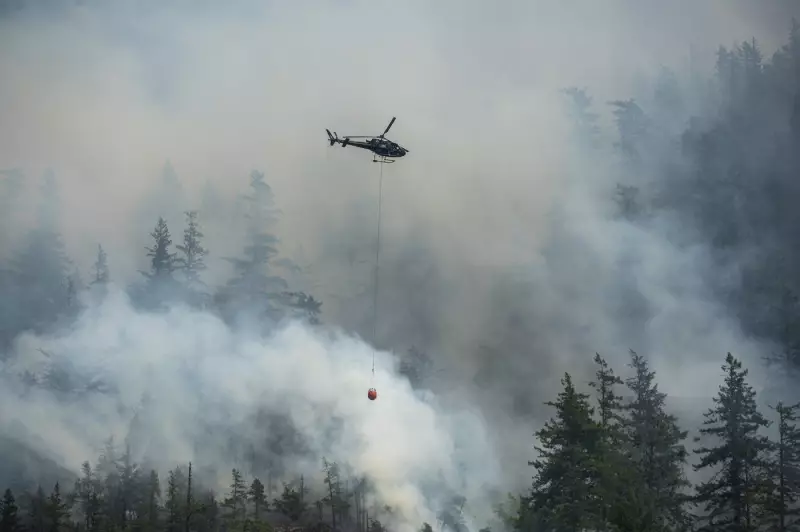
One stark instance occurred in British Columbia on June 10, 2025, when aerial crews battled the out-of-control Dryden Creek fire north of Squamish. Such events are increasingly symptomatic of the hotter, drier conditions fostered by a warming climate, putting communities, forests, and air quality at risk.

What This Warming Means for Canada's Future
The consistent placement of recent years among the warmest on record signals a shift in baseline conditions. Scientists link this trend to increased frequency and intensity of extreme weather events. For Canada, this encompasses not only wildfires but also:
- More volatile precipitation patterns, leading to both floods and droughts.
- Accelerated warming in the Arctic, affecting ecosystems and Indigenous communities.
- Shifting agricultural seasons and pressures on water resources.
- Impacts on winter sports industries and traditional ways of life.
The third-place ranking for 2025 underscores that each year now consistently registers well above historical norms, moving the goalposts for what is considered a typical climate year.
Beyond the Headline Number
While the global average temperature is a crucial metric, its effects are felt unevenly. Canada, particularly its northern regions, is warming at a rate roughly twice the global average. This disproportionate heating amplifies the challenges for biodiversity, infrastructure built on permafrost, and coastal communities facing sea-level rise.
The data point from 2025 serves as a latest reminder that climate change is a present-day issue, not a distant future concern. The ongoing trends demand attention to adaptation strategies in urban planning, forestry management, and emergency preparedness, as well as continued efforts in mitigation to curb future warming.