As the climate crisis intensifies and the need to reduce reliance on fossil fuels becomes increasingly urgent, the subsurface is emerging as a key asset in Canada's energy transition, particularly for remote communities. It is in this context that Professor Jasmin Raymond of the Institut national de la recherche scientifique (INRS) has been appointed to the Tier 1 Canada Research Chair in Sustainable Geoenergy Systems Analysis, funded at $1.4 million by the Natural Sciences and Engineering Research Council of Canada (NSERC).
Accelerating the Energy Transition
The Chair aims to accelerate the energy transition and reduce dependence on fossil fuels by advancing innovative geoenergy solutions. It builds on Professor Raymond's recognized expertise in geothermal energy—used for heating, cooling, and electricity generation—and explores the potential of the Earth's crust to meet energy needs while minimizing environmental impacts.
His research program combines numerical modelling, geological characterization, and field experimentation in natural laboratory settings, and focuses on three main areas: geothermal energy, green hydrogen storage, and natural hydrogen exploration.

Supporting Energy Autonomy Through Geothermal Energy
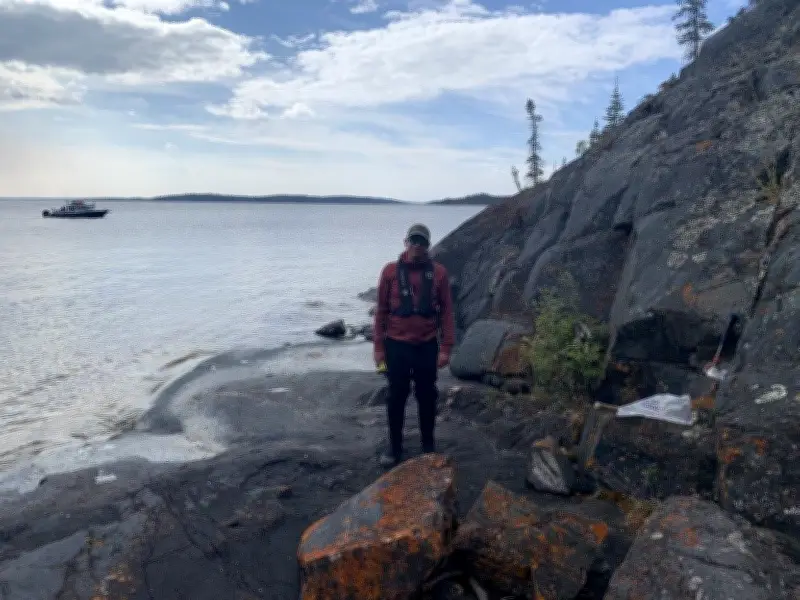
Professor Raymond and his team are exploring the geothermal potential of remote regions, working closely with rural, isolated, and Indigenous communities, particularly in northern Canada. Their research is conducted directly in these communities, with the goal of supporting their energy transition, as many remain heavily reliant on diesel and other fossil fuels.
“Very little scientific research is conducted in these remote communities. They represent markets that are too small to attract major energy industry players. Yet investing in these regions is essential to strengthen their energy sovereignty and reduce the environmental footprint associated with fossil fuel use,” said Jasmin Raymond, Professor at INRS and Canada Research Chair in Sustainable Geoenergy Systems Analysis.
As scientific lead of the Geothermal Open Laboratory at the INRS Eau Terre Environnement Research Centre, Professor Raymond is building on successful results obtained in subarctic environments and extending them to more extreme conditions, including the Arctic's Franklinian Basin.
Underground Green Hydrogen Storage to Stabilize Energy Supply
As part of the Chair, his team is also investigating ways to convert surplus electricity generated from renewable sources, such as wind and solar, into green hydrogen. This approach enables energy storage and contributes to stabilizing energy systems.
The research focuses in particular on the Magdalen Islands, where subsurface salt formations are well suited for the creation of large underground storage caverns.
“The Islands still rely mainly on a thermal power plant for their energy supply, but wind energy is developing rapidly. Our work aims to support this shift by providing an underground storage solution using green hydrogen to ensure a reliable and continuous energy supply,” added Raymond.
Natural Hydrogen: A Promising Emerging Resource
In addition to geothermal and green hydrogen storage, the Chair explores natural hydrogen—a naturally occurring resource that could serve as a low-carbon energy source. This emerging field has the potential to complement renewable energy systems and further reduce fossil fuel dependence.
Through these integrated research efforts, Professor Raymond's team is paving the way for sustainable energy solutions that empower remote communities, enhance energy sovereignty, and contribute to Canada's climate goals.