As utilities respond to electrification, smart grid modernization, regulatory pressure, and rising customer expectations, many are still constrained by legacy systems, data silos, and fragmented IT/OT environments. Info-Tech Research Group's newly published blueprint, Build a Technical Reference Architecture for Utilities, outlines a practical framework to help utility leaders connect technical capabilities to business priorities, reduce architectural complexity, and embed governance into technology investment decisions.
Modernization Efforts Can Add Complexity
Utilities are under pressure to modernize aging technology environments while supporting electrification, smart grid initiatives, and rising expectations for digital service. However, new insights from Info-Tech Research Group indicate that modernization efforts can create additional complexity when technical decisions are not clearly connected to business capabilities, governance, and long-term investment priorities.
According to Info-Tech's resource findings, one of the most common challenges utility organizations face is linking architectural decisions to business outcomes such as grid reliability, regulatory compliance, customer experience, operational efficiency, and resilience. When technical architectures are developed independently from business priorities, technology initiatives can become disconnected from organizational value, making it more difficult to justify investments, measure results, and sustain modernization efforts.

The Need for a Technical Reference Architecture
To help utility organizations address these challenges, the global research and advisory firm has recently published its blueprint, Build a Technical Reference Architecture for Utilities. The resource provides a structured framework for developing and operationalizing a technical reference architecture (TRA), enabling leaders to align technology capabilities with business priorities, improve interoperability, reduce duplication, and make more informed investment decisions.
“Utilities do not need more technology in isolation. They need a clearer way to connect technical decisions to reliability, compliance, customer experience, and operational value,” says Bevin Chau, research director at Info-Tech Research Group. “A technical reference architecture gives leaders the standards, interfaces, and governance needed to modernize with discipline rather than simply adding more complexity.”
Info-Tech's Three-Phase Framework
A key finding from Info-Tech's blueprint is that organizations derive the greatest value from architecture when it is operationalized rather than treated as a standalone deliverable. The firm's resource emphasizes that a TRA should serve as a strategic compass, design playbook, and governance framework that guides technology decisions, investment planning, risk management, and modernization efforts across the organization.
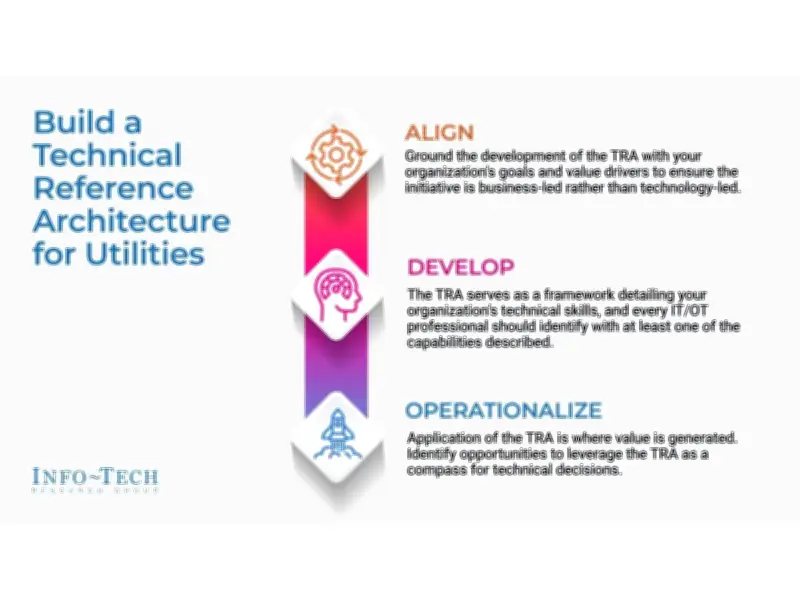
To help utility leaders put these principles into practice, the Build a Technical Reference Architecture for Utilities blueprint outlines the following three-phase approach:
- Phase 1: Assess and Align – Evaluate current architecture, identify gaps, and align technical capabilities with business priorities such as reliability, compliance, and customer experience.
- Phase 2: Design and Develop – Create a standardized technical reference architecture that defines interfaces, data models, and governance rules to ensure interoperability and reduce duplication.
- Phase 3: Operationalize and Govern – Embed the TRA into investment planning, risk management, and modernization processes to sustain value over time.
By following this framework, utilities can avoid the pitfalls of ad-hoc modernization and instead build a cohesive technology foundation that supports long-term business goals.