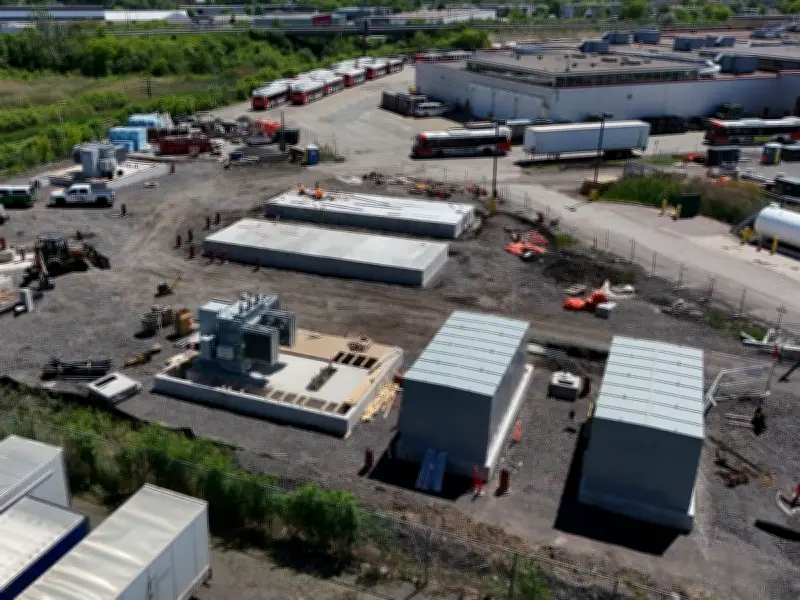
Two large natural gas generators are being installed at OC Transpo's garage on St-Laurent Boulevard, where the city's growing fleet of e-buses will be stored and charged. The pair of heavy-duty four-megawatt machines are part of a larger project to retrofit the garage with the electrical and structural capacity for hundreds of new zero-emission buses.
Background of the Project
Around 111 e-buses were part of OC Transpo's fleet, according to the transit agency's update on May 15, and the city is working toward a goal of having 350 e-buses in service by the end of 2027. With those buses comes a multi-million-dollar price tag to install charging infrastructure and to upgrade the electrical grid, which includes a 13.8-kilovolt substation and a new Hydro Ottawa distribution system.
Purpose of the Generators
The main purpose of the natural gas generators will be to serve as a backup power supply so buses can continue to charge in the case of a power outage. "If a local grid outage were to occur, this project would require a power-generation source large enough to provide charging to the e-bus fleet, potentially for multi-day operation," Daniel Villeneuve, manager of the zero-emission bus program, wrote in a statement to the Ottawa Citizen.

In addition, the city says it also plans to run the generators during "peak demand periods." These periods usually occur in the afternoons and evenings on days when there is higher-than-average city-wide demand on the power grid. It's not an everyday thing, Villeneuve said, adding it happens around 30 days a year on the higher end of the yearly average. "Based on these estimates at the high end, the generators could run for about 120 hours a year for peak demand periods, taking the pressure off the public grid when the community needs it most," Villeneuve wrote.
This way, he said, the city can be "a responsible partner during periods of extreme strain on the provincial power grid," adding that the strategy also "yields significant operational savings."
Cost and Timeline
City reports say one natural-gas generator costs around $14 million. According to the city, the natural gas-powered generators are expected to be ready in September and will serve two purposes: to provide backup electricity during power outages; and to minimize electricity costs at the facility during peak periods.
Interim Power Strategy
While the generators are expected to be ready to go before construction on the substation is complete, the city was clear the generators weren't expected to run for additional hours until the other electrical upgrades were done. "The interim power strategy is fully capable of meeting the facility's baseline needs without extra reliance on generators," Villeneuve wrote. "Their use remains strictly limited to backup power outages and peak grid demand situations, regardless of the substation timeline."
This approach raises questions about why fossil fuel generators are part of Ottawa's zero-emission bus strategy, but city officials emphasize that the generators are a temporary measure to ensure reliability and cost-effectiveness while the grid is upgraded to handle the full electric fleet.