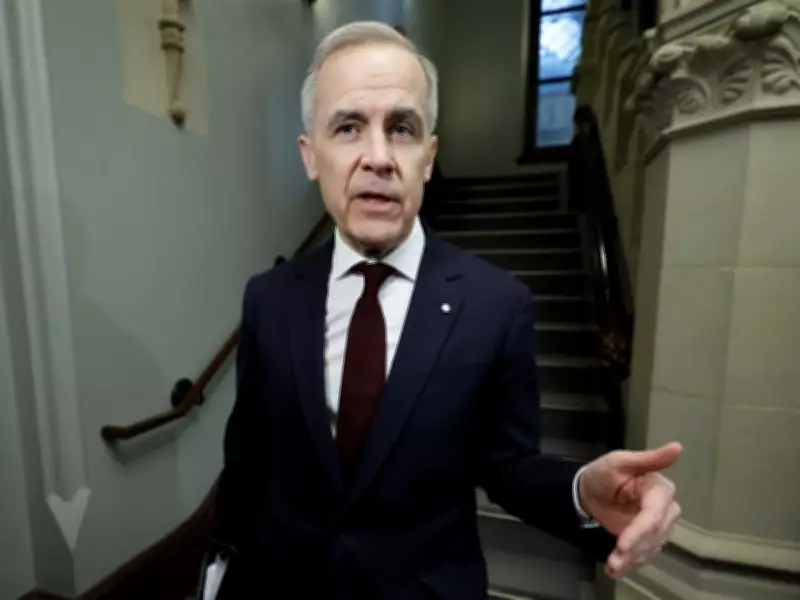
Carney Announces Major Shift in Canada's Electric Vehicle Policy
Prime Minister Mark Carney is set to unveil a significant overhaul of Canada's automotive sector strategy, moving away from the previous government's controversial electric vehicle mandate. The new approach focuses on tailpipe emissions reductions and targeted financial incentives to accelerate the transition to cleaner transportation.
Scrapping the EV Sales Mandate
The Liberal government will officially eliminate the 100 percent zero-emission vehicle sales target that was scheduled for 2035. This policy, often referred to as the EV sales mandate, had faced increasing criticism from automotive manufacturers, industry representatives, and Ontario Premier Doug Ford, who argued the timeline was unrealistic and burdensome for the sector.
According to sources briefed on the announcement, Carney will instead implement a more flexible regulatory framework that emphasizes measurable environmental outcomes rather than rigid sales quotas.

New Emissions Reduction Targets
The centerpiece of the new strategy is a 75 percent reduction in tailpipe emissions by 2035, with an aspirational goal of reaching 90 percent by 2040. These regulations represent a return to emissions-based standards rather than vehicle sales targets, allowing manufacturers more flexibility in how they achieve pollution reductions.
The government plans to review these regulations in five years to assess progress and make adjustments as needed based on technological developments and market conditions.
Revamped EV Purchase Incentives
Carney's administration will partially restore popular electric vehicle purchase incentives that expired in 2024 when the original federal program exhausted its funding. The new program offers:
- Incentives ranging from $2,000 to $5,000
- Eligibility limited to vehicles priced under $50,000
- Requirements that vehicles be covered by free-trade agreements with Canada
This structure means Chinese electric vehicles expected to enter the Canadian market under a new tariff-lifting agreement will not qualify for incentives. Instead, the program will primarily benefit vehicles from American manufacturers covered by the Canada-U.S.-Mexico Agreement (CUSMA).
Major Infrastructure Investment
The government is committing $1.5 billion in new funding to expand Canada's electric vehicle charging network nationwide. This substantial investment aims to address one of the key barriers to EV adoption—charging infrastructure availability—particularly in rural and remote areas where charging options remain limited.
Additional Support for Auto Sector
The comprehensive strategy includes several other significant components:
- $3 billion in new funding for auto parts manufacturers through the federal Strategic Response Fund
- $750 million in training supports for workers transitioning to new roles in the evolving automotive industry
- Launch of consultations on an auto sector tariff remittance plan as Canada, the U.S., and Mexico begin reviewing CUSMA
The tariff remittance plan will explore ways to compensate vehicle and auto part manufacturers impacted by ongoing trade tensions with the United States, particularly during the uncertainty surrounding the CUSMA review process.
Strategic Shift in Approach
Carney's announcement represents a fundamental shift from the previous administration's approach to electric vehicle policy. Rather than mandating specific sales targets, the new strategy combines:
- Clear environmental benchmarks through emissions reductions
- Financial incentives to make electric vehicles more accessible to middle-class Canadians
- Substantial infrastructure investment to support widespread adoption
- Comprehensive support for the domestic automotive industry during the transition
The prime minister is scheduled to provide full details of the new auto sector strategy during a press conference in Vaughan, Ontario, marking what his government describes as a more pragmatic and achievable path toward transportation electrification in Canada.