Ontario Premier Advocates for Consumer Boycott of Chinese Electric Vehicles
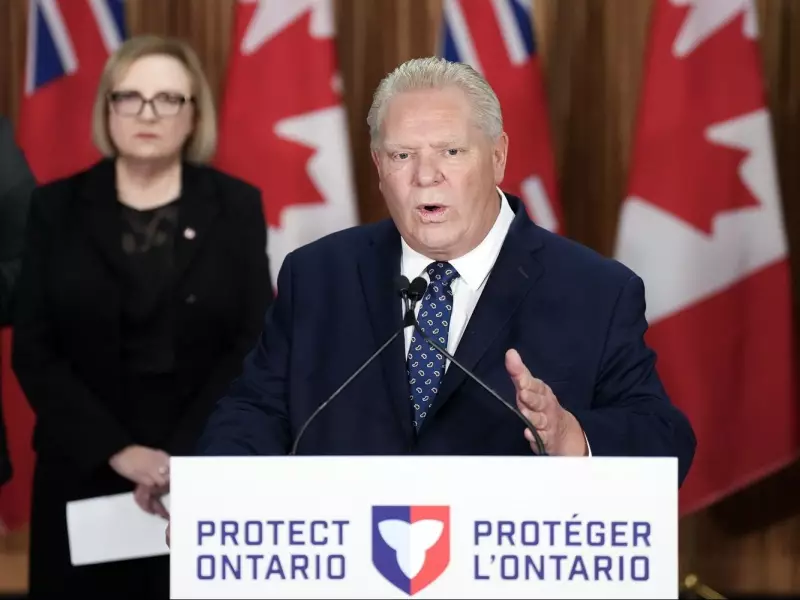
Ontario Premier Doug Ford has publicly urged Canadian consumers to boycott Chinese-made electric vehicles as they re-enter the Canadian market. This call to action comes amid growing tensions between provincial and federal leadership over recent trade agreements affecting the automotive sector.
Trade Deal Sparks Provincial Opposition
The premier's stance directly challenges Prime Minister Mark Carney's recent agreement with Chinese President Xi Jinping. This bilateral deal reduced 100% import tariffs on Canadian canola in exchange for improved access to China's electric vehicle market. Ford has expressed significant concern about the potential repercussions for Ontario's struggling auto industry, emphasizing that there was no prior warning from the federal government about this arrangement.
"Boycott the Chinese EV vehicles," Ford stated during a media briefing. "Support companies that are building vehicles here. It's as simple as that."

Manufacturing Presence Questioned
During a Wednesday news conference with industry leaders, including representatives from the Canadian Vehicle Manufacturers' Association, Automotive Parts Manufacturers' Association, and Unifor, Ford questioned whether Chinese companies genuinely intend to establish manufacturing facilities in Canada. He remains skeptical despite federal assurances to the contrary.
"China will never, ever — and this will go on record — open up a manufacturing facility," Ford declared at a separate event earlier in the week.
Industry Leaders Echo Concerns
Unifor National President Lana Payne supported Ford's position, noting that China's agreement allows for an annual import quota of 49,000 vehicles without guarantees of domestic manufacturing investment. "Given China's massive, and I say massive, overcapacity in EV production, there is little reason for those companies to establish real and meaningful manufacturing operations in our country," Payne explained.
Compounding Challenges for Canadian Auto Sector
The Canadian automotive industry faces multiple pressures:
- Existing tariffs imposed by former U.S. President Donald Trump aimed at repatriating manufacturing jobs
- Previous federal tariffs on Chinese EVs implemented in 2024 over market flooding concerns
- Retaliatory Chinese tariffs on Canadian canola that preceded the current agreement
Flavio Volpe, President of the Automotive Parts Manufacturers' Association, described the situation as particularly challenging: "The concession is directly to the market prospects of the companies that we're trying to bolster at a time when we're under unprecedented pressure."
Calls for Federal Support and Competitive Measures
Beyond the consumer boycott appeal, industry representatives have requested federal assistance to enhance Canada's automotive competitiveness. Specific recommendations include:
- Reducing costs associated with manufacturing facility investments
- Lowering expenses for machinery acquisition and implementation
- Increasing support for research and development initiatives
Payne summarized the industry's precarious position: "We are in the fight of our lives here fending off Trump's tariffs and that fight just got a little harder."
The ongoing dispute highlights significant divisions in Canadian trade policy approaches and raises important questions about balancing international agreements with domestic industrial priorities.