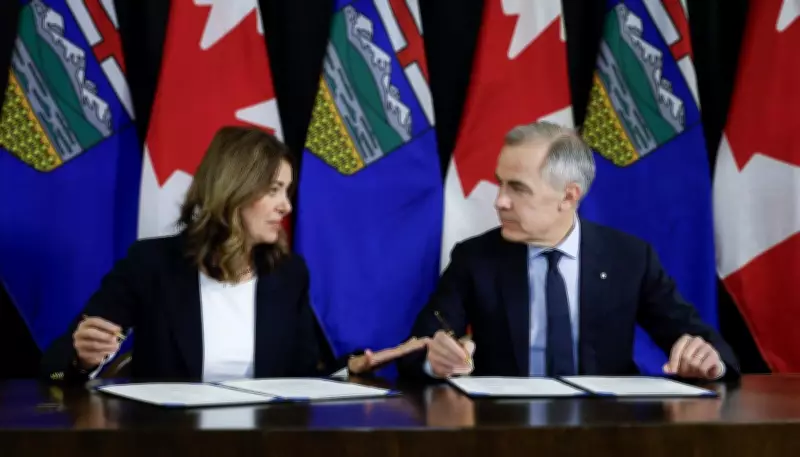
Oil executives and climate groups are voicing frustration over the sluggish implementation of Alberta's Memorandum of Understanding (MOU), though they remain divided on the carbon tax issue. The MOU, signed by Prime Minister Mark Carney and Alberta Premier Danielle Smith in Calgary on November 27, 2025, was intended to align federal and provincial energy policies.
Industry Concerns
Oil industry leaders argue that the slow pace of the MOU is hindering investment and economic growth. They emphasize the need for clarity on carbon pricing mechanisms to ensure competitiveness. "We are losing ground to other jurisdictions because of the uncertainty," said a spokesperson for a major oil sands producer.
Climate Advocates' Perspective
Environmental groups, while also critical of the pace, focus on the lack of ambitious emission reduction targets. They contend that the MOU does not go far enough in addressing climate change. "The carbon tax is a crucial tool, but it must be strengthened, not weakened," stated a representative from a leading climate organization.

Divergent Views on Carbon Tax
The carbon tax remains a contentious point. Oil executives call for its removal or reduction to ease industry burdens, whereas climate groups advocate for its expansion to drive faster decarbonization. This disagreement underscores the challenge of balancing economic and environmental priorities.
As the MOU implementation continues, stakeholders on both sides urge the government to accelerate progress and provide clearer policy direction. The coming months will be critical in determining the agreement's impact on Alberta's energy sector and climate goals.