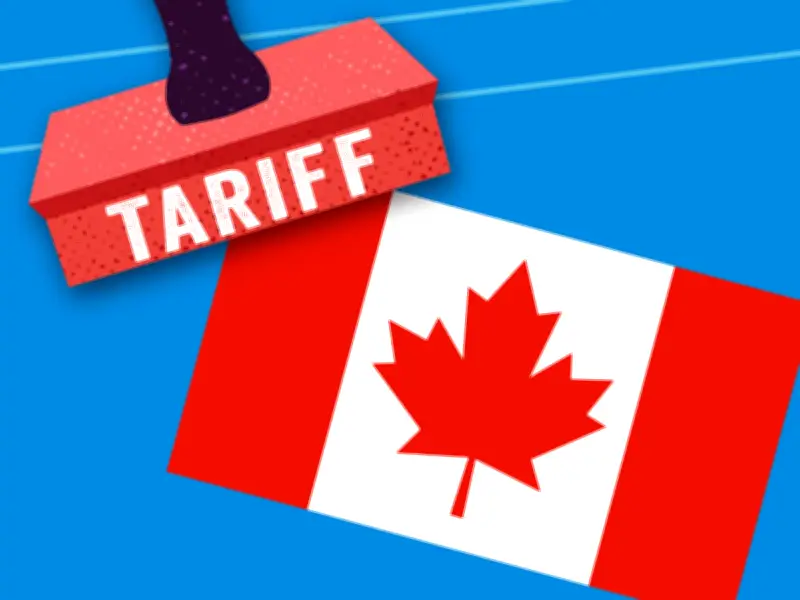
Canada's internal trade barriers impose a nine per cent tariff on its own goods and services, exceeding the 5.9 per cent U.S. tariff that prompted a national emergency response, according to an opinion piece by Koyna Gupta in the Financial Post.
Internal Tariffs Higher Than U.S. Tariffs
The 5.9 per cent figure is the Bank of Canada's October 2025 estimate of the average U.S. tariff rate on Canadian goods. The nine per cent estimate, published in January by IMF economists Federico Diez and Yuanchen Yang with University of Calgary economist Trevor Tombe, measures the ad valorem equivalent of Canada's internal regulatory barriers. In service sectors like health care and education, the equivalent tariff exceeds 40 per cent. "Such a level would be prohibitive in most international trade agreements," the authors write.
Economic Impact of Barriers
Fully eliminating these barriers would eventually raise Canada's real GDP by up to seven per cent, or roughly $210 billion annually. Despite this, the political response has been asymmetric. The U.S. tariff triggered emergency premiers' meetings, retaliatory measures, federal election commitments, and a "Canada Strong" national identity. The internal tariff produced an IMF report that most Canadians have not read.

Recent Measures Fall Short
Bill C-5, the One Canadian Economy Act, received royal assent last year, committing the federal government to removing most of its exceptions under the Canadian Free Trade Agreement. In December, provinces signed the Canadian Mutual Recognition Agreement on goods, covering most product categories but excluding food, beverages, tobacco, and alcohol. The Spring 2026 Economic Update includes a whole-of-government pro-competition plan acknowledging weakened competitive intensity.
However, these steps do not go far enough. The Mutual Recognition Agreement does not address services. Bill C-5 solved the federal layer, but the nine per cent average tariff and 40-plus per cent services barriers reside mainly in the provincial layer—in gaps between nurse licensing across provinces, procurement rules favouring local suppliers, professional licensing regimes, and other legal nooks. The spring update's competition plan sets no sector-specific timelines and makes no commitment to eliminate any identified services barrier.
Political Will Needed
Constitutional considerations are important but not decisive. Provinces have authority over licensing, standards, and professional regulation. The federal government cannot unilaterally harmonize what provinces have jurisdiction to fragment, but Ottawa has declined to use all available tools to obtain provincial co-operation. These include making fiscal transfers conditional on regulatory harmonization milestones, public reporting on non-compliant provinces, and imposing measurable targets. None appear in the spring update.
Concentrated Interests vs. Diffuse Benefits
The political economy of interprovincial barriers is straightforward. A nurse whose provincial licensing body would lose members to interprovincial mobility is a concentrated interest with organized representation. A patient in a province with a physician shortage who would benefit from easier cross-provincial credentialing is a diffuse interest with no equivalent lobby. Canadian governance has consistently resolved this tension in favour of the concentrated interest. The IMF paper quantified the cost: $210 billion sitting unrealized every year forever because of choices provincial legislatures have made and maintained, and federal governments consistently decline to challenge and pressure.