Prime Minister Mark Carney announced Tuesday that Canada will not meet its near-term greenhouse gas emissions benchmarks established under the former Justin Trudeau government, citing the country's economic and affordability crisis, interprovincial strife, and unprecedented geopolitical instability.
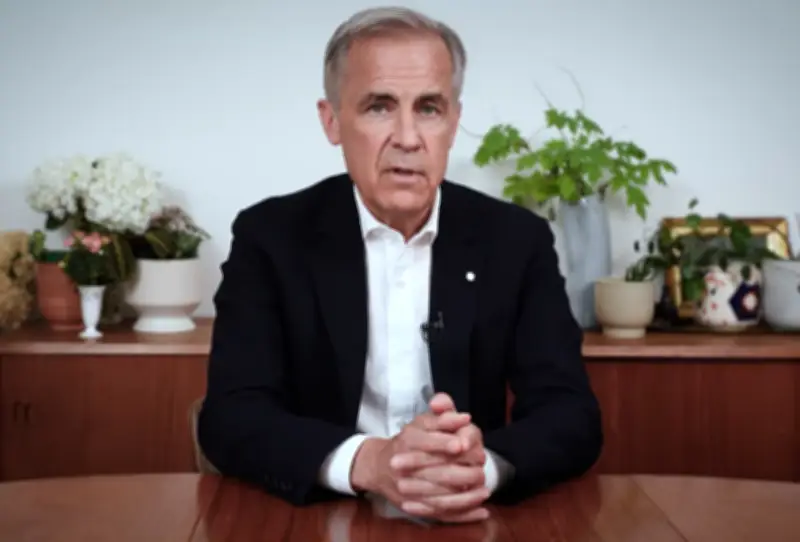
In a 17-minute video posted on his YouTube page titled "Forward Guidance: Canada's Energy Future," Carney outlined the reasons for abandoning the targets. "The climate plan we inherited from the previous government was well-intentioned and well-suited for the times in which it was designed," Carney said. "The climate crisis is still with us and our commitment to fighting it is absolute — but the certainties of the world in 2015 are long gone."
Statutory obligations set aside
Canada's emissions benchmarks, set by the Trudeau government, were based on agreements including the 2015 Paris Agreement, Canada's 2021 Net-Zero Emissions Accountability Act, and the 2030 Emissions Reduction Plan, which vowed a 45% to 50% reduction in emissions from 2005 levels. Milestones under the Net-Zero Act are not merely targets but statutory obligations hard-coded into legislation.

Carney emphasized that the energy transition remains a long-term goal but argued that short-term solutions are necessary to address current problems. "The goal remains the same, but as times have changed we must change our plan to get there," he said. "We can't afford to restrain the growth of an important part of our energy mix — oil and gas — to meet a short-term goal."
Geopolitical instability cited
Carney noted that geopolitical conditions have not been this unstable since the end of the Second World War. "We must establish stability amidst this chaos," he said, framing the decision as a pragmatic response to global turmoil.
Since becoming prime minister just over a year ago, Carney has systematically dismantled several key Trudeau-era environmental policies, including the 2035 ban on internal combustion engine vehicles, the consumer carbon tax, the Clean Electricity Regulations, and the emissions cap on Canada's oil and gas industry.
Alberta tensions referenced
Without directly addressing growing alienation and separatist sentiments in Alberta, Carney referenced regional tensions surrounding Canada's energy policy. He recalled growing up in Alberta under former Prime Minister Pierre Trudeau's divisive National Energy Program (NEP).
"I was a teenager in Edmonton when the National Energy Program was introduced and I remember how Ottawa made Albertans feel like our reserves weren't our own," Carney said. "And then more recently, we were made to feel our energy contributions were running against the tides of history. What should have brought us together began to divide us, contributing to a half-century of politics that have too often pulled us apart."
Carney's announcement marks a significant shift in Canada's climate policy, prioritizing economic stability and energy sector growth over meeting near-term emissions targets.