Calgary experienced a 225 percent increase in pedestrian fatalities in 2025, according to the city's own Vision Zero page, despite a target to reduce all major injuries and fatalities by 25 percent under the Safer Mobility Plan 2024-2028. This stark rise underscores the failure of current approaches that rely on individual responsibility rather than systemic changes, argue community advocates Alanna de Boer and Alex Williams.
Helmets Alone Cannot Prevent Fatalities
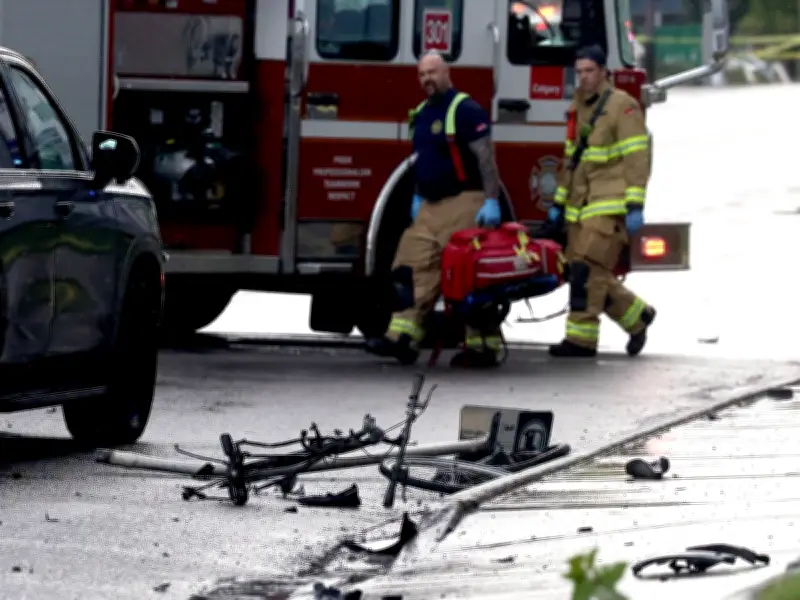
Following a fatal accident involving a cyclist and two vehicles on June 20, a Calgary Police Service officer advised cyclists to "take care where they ride and always wear a helmet if they have one. And on busy streets, if they can avoid them, that’s better." The officer added that the pathway system is much safer, but if cyclists must ride on streets, they should find quieter ones. Critics say this advice places the burden on cyclists and ignores the need for safer road design.
As BlueSky user Tiny Beaches remarked: "Who thinks a helmet is going to help when someone mows you down with their SUV?" This sentiment reflects growing frustration with the repeated recommendations to "look both ways," "slow down," and "wear a helmet" after each incident.

Vision Zero Goals Unmet
Both the City of Calgary and Calgary Police Service have Vision Zero pages on their websites, expressing commitment to "working collaboratively . . . toward a common goal of Vision Zero — mobility free of fatalities and major injuries." The Safer Mobility Plan 2024-2028, co-authored by the city and CPS, aimed to reduce traffic fatalities. However, as the plan reaches its midpoint, fatalities continue to rise. The 225 percent increase in pedestrian fatalities in 2025 starkly contrasts with the 25 percent reduction target.
De Boer and Williams argue that the loss of life on Calgary streets is entirely avoidable. They point to the Alberta Traffic Safety Act, which under Section 75 of the Use of Highway and Rules of the Road Regulation states that a person operating a cycle on a highway has all the rights and duties of a motor vehicle driver. This legal framework, they say, wrongly treats bicycles and half-ton trucks as equivalent road users.
Need for Infrastructure Change
To achieve Vision Zero, the authors call for changes beyond gentle reminders. They cite successful measures in other cities: lowering speed limits citywide, adding curb extensions, narrowing roads, and building networks of bike and pedestrian infrastructure. Such infrastructure would allow children to gain independence, accommodate people with mobility challenges, and make cars not the only viable transportation option.
"When we design our cities for everyone — from our youngest Calgarians to our oldest, the most able-bodied to the least able-bodied — we design cities that benefit everyone," they write. De Boer is a community builder, Bike Bus co-leader, and safe and active transportation advocate. Williams is chair of Calgary Transit Riders and a multimodal transportation advocate.