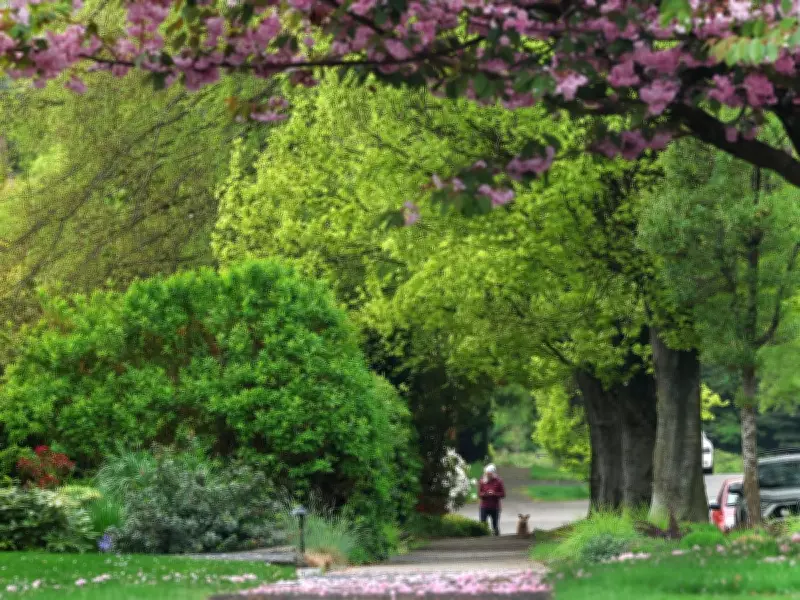
Vancouver park board staff are recommending a reduction in the frequency of tree inspections for the city's street and park trees, citing an inability to keep up with growing demands. The proposal suggests shifting from detailed inspections and pruning every seven years to a 10-year cycle for the city's 150,000 street trees and 38,000 park trees.
However, a tree risk assessment expert warns that while the change may be cost-efficient, it could compromise safety by missing dangerous defects. Norman Oberson, a provincially certified tree risk assessor and owner of Arbutus Tree Service, stated, "It comes down to money, but you'll miss defects in trees that cause tree parts to fail." Oberson is also a board member of the Trees of Vancouver Society.
Proposed Policy Details
The new policy, outlined in a report to park board commissioners ahead of a May 4 meeting, adopts a 10-year detailed inspection cycle for most stand-alone trees, supplemented by annual visual inspections. According to the director of park operations, this approach "balances public safety, operational feasibility, and responsible use of public funds."

The current policy, established in 1993, requires a fixed volume of pruning and inspection work regardless of findings, leading to an obligation to prune over 21,000 street trees annually. The urban forestry department has struggled to meet these requirements while also addressing park and golf course trees, storm-related work, service requests, and other priorities like tree planting and watering.
Current Challenges
In 2025, the department responded to 920 storm-related tree failures, representing about 20% of its workload. It also handles over 10,000 service requests per year, reflecting an increasingly engaged community. The city's urban forest includes all trees on public and private land, with the park board responsible for trees on streets (9% of canopy cover) and in parks (5.5% of canopy cover). The new policy would also incorporate trees on city-owned land and laneways, accounting for 1.25% of canopy cover.
Under the proposed plan, the city would systematically complete detailed inspections of all stand-alone trees over 10 years, one neighborhood at a time. This approach aims to improve efficiency and resource allocation.
Expert Concerns
Critics like Oberson argue that extending the inspection cycle could lead to undetected defects, increasing the risk of tree failures. He emphasized that while the policy may save money, it may not be cost-effective if it results in hazardous trees going unnoticed. The park board is expected to vote on the proposal at an upcoming meeting.