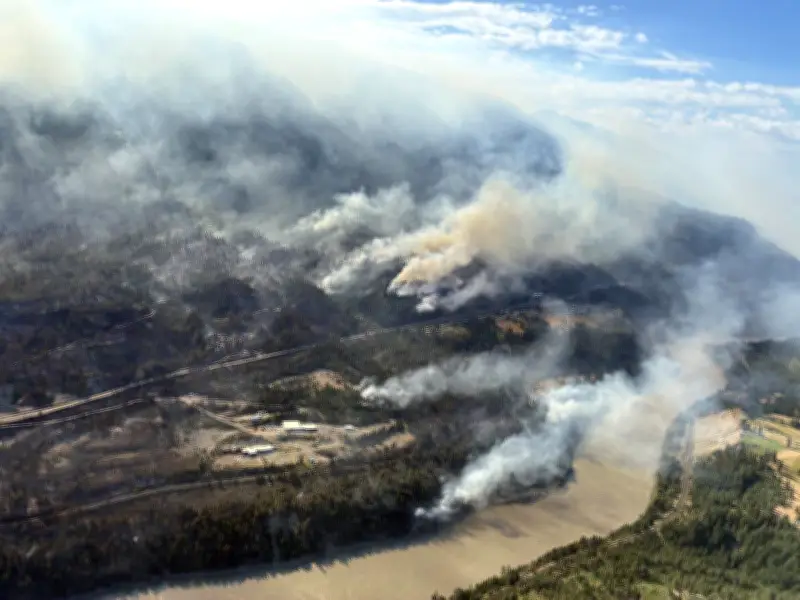
A wildfire near Lytton, British Columbia, has destroyed at least one home and prompted evacuation orders and alerts, bringing back painful memories for residents who rebuilt their lives after the catastrophic 2021 fire that leveled the village.
Evacuation orders and alerts issued
Evacuation orders and alerts were issued in and around Lytton on Tuesday, June 23, 2026, as a wildfire threatened the community. The BC Wildfire Service reported that the fire, which started earlier in the day, had grown rapidly due to hot and dry conditions. Residents were ordered to leave immediately in some areas, while others were placed on alert to be ready to evacuate at a moment's notice.
Residents relive 2021 trauma
For many Lytton residents, the evacuation orders triggered traumatic memories of the June 2021 wildfire that destroyed most of the village, killing two people and burning over 90% of structures. “It’s like a nightmare all over again,” said one resident who wished to remain anonymous. “We just finished rebuilding our home last year, and now we might lose it again.” The 2021 fire was one of the worst in British Columbia's history, with temperatures reaching a record 49.6°C the day before the fire swept through.

Emergency response and community support
Emergency crews from multiple agencies, including the BC Wildfire Service and local fire departments, are battling the blaze. The Thompson-Nicola Regional District has set up an emergency reception centre for evacuees. The Ministry of Transportation and Infrastructure has closed a section of Highway 1 near Lytton due to the fire. The Canadian Red Cross is providing support to affected residents. “Our priority is the safety of residents and firefighters,” said a spokesperson for the BC Wildfire Service. “We are doing everything we can to contain this fire.”
Climate change and wildfire risk
The wildfire comes amid a heat wave that has broken temperature records across British Columbia. Scientists have linked the increasing frequency and intensity of wildfires to climate change. According to a study by the University of British Columbia, the number of extreme wildfire days in the province has increased by 300% since the 1970s. The 2021 Lytton fire was exacerbated by a heat dome that pushed temperatures to unprecedented levels. “This is a stark reminder that we need to adapt to a new reality of more frequent and severe wildfires,” said Dr. Sarah Henderson, a climate scientist at UBC.
Government response and future prevention
The provincial government has announced additional funding for wildfire prevention and mitigation measures, including more fire breaks and community education programs. Premier David Eby stated, “We stand with the people of Lytton. We will continue to invest in resources to protect communities and support those affected by wildfires.” The federal government has also offered assistance, with Minister of Emergency Preparedness Harjit Sajjan saying, “We are monitoring the situation closely and are ready to provide any necessary support.”