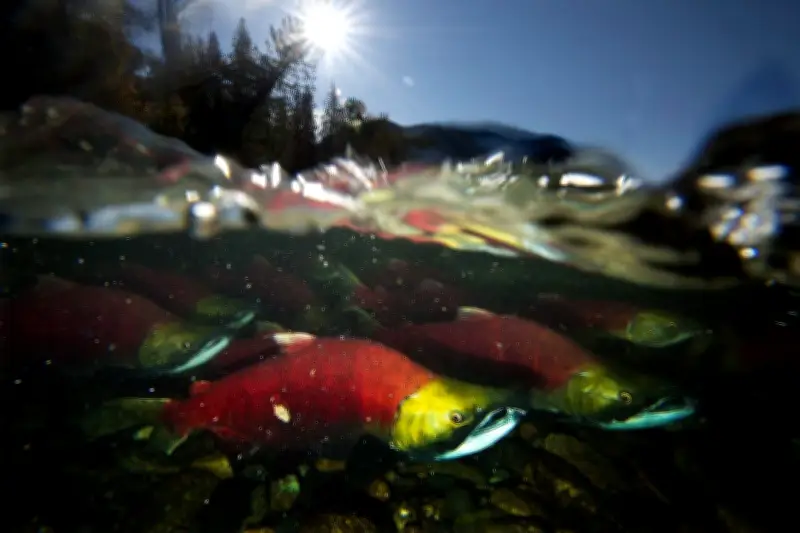
A new study from the University of British Columbia (UBC) has found that B.C. salmon are at greater risk from high-temperature events than previously measured. The research analyzed younger salmon in two recent studies to assess their survival under heat stress, revealing a higher vulnerability than earlier estimates.
Study Details and Findings
The UBC study, published in a peer-reviewed journal, examined the thermal tolerance of juvenile salmon. Researchers found that younger salmon, which are critical for population sustainability, experience higher mortality rates during extreme heat events. The study used data from controlled experiments and field observations to model the impact of rising water temperatures.
According to lead researcher Dr. Emily Chen, 'Our findings indicate that current risk assessments underestimate the threat to salmon populations. Younger fish are particularly sensitive to temperature spikes, which could have long-term implications for B.C.'s salmon stocks.'

Implications for Conservation
The study's results come amid growing concerns over climate change impacts on Pacific salmon. Warmer river temperatures have been linked to reduced survival rates and altered migration patterns. The researchers urge policymakers to incorporate these new data into conservation strategies, including habitat restoration and water management.
The study also highlights the need for more frequent monitoring of water temperatures in key salmon habitats. 'We cannot rely on outdated models,' said Chen. 'Adaptive management is essential to protect these vital fish.'