A large, harmless asteroid is set to zip past Earth this weekend, providing a safe celestial spectacle for astronomers and skywatchers. The space rock, measuring several hundred meters in diameter, will pass at a distance that poses no threat to our planet, according to experts.
Asteroid Flyby Details
The asteroid, designated by scientists as 2026-XX, will make its closest approach on Saturday. It will pass at a distance of approximately 1.2 million kilometers from Earth, which is more than three times the distance to the Moon. This proximity allows for detailed observation by telescopes, but it remains well outside any risk zone.
NASA's Center for Near-Earth Object Studies (CNEOS) has tracked the asteroid since its discovery earlier this year. "This flyby is a great opportunity for scientific study and public engagement," said a CNEOS spokesperson. "There is absolutely no risk of impact."

Viewing Opportunities
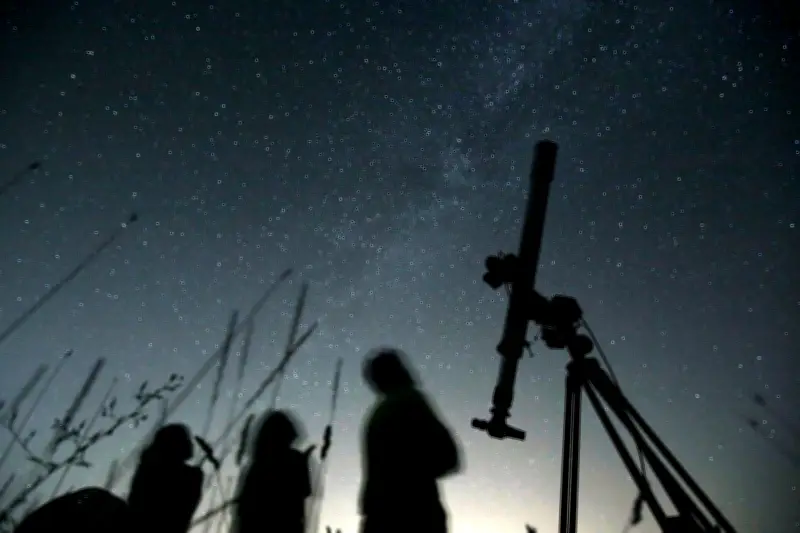
Amateur astronomers with moderate-sized telescopes may be able to spot the asteroid as a slow-moving point of light against the stars. The asteroid will be brightest in the night sky on Saturday and Sunday. Observatories around the world are planning to track it to refine its orbit and study its composition.
This event comes amid increased public interest in near-Earth objects (NEOs). Recent advancements in detection technology have led to the discovery of thousands of NEOs, with none posing an imminent threat in the foreseeable future.
Scientific Significance
The flyby provides a chance to gather data on the asteroid's size, shape, rotation, and surface features. Radar observations from facilities like the Goldstone Solar System Radar in California will be used to create detailed images. Such data helps scientists understand the population of asteroids and improve impact prediction models.
"Each close approach gives us valuable information," said a planetary scientist from the University of Arizona. "We can test our tracking capabilities and learn more about these ancient remnants of the solar system."
The asteroid's orbit is well understood, and its path will be monitored for decades to come. Future flybys may occur, but none are expected to pose a threat.