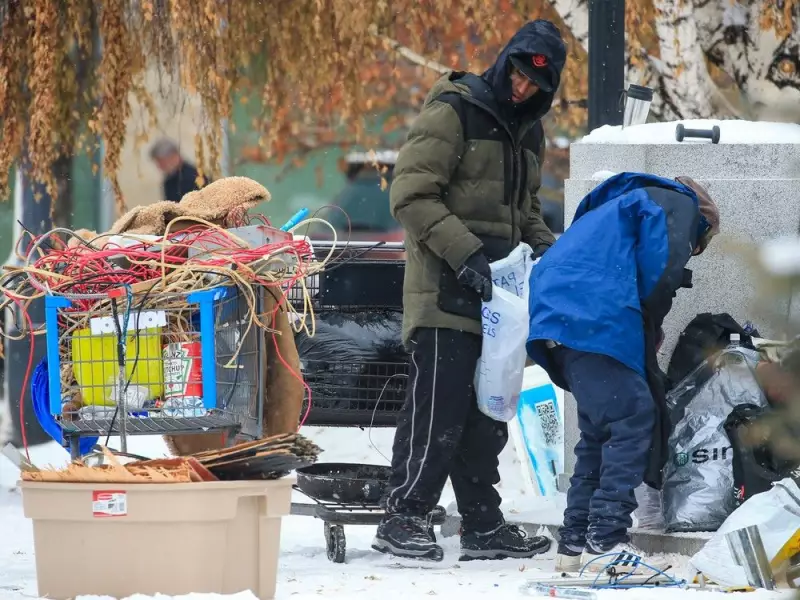
More than twenty Calgary organizations are preparing to activate the city's annual extreme weather response program, designed to safeguard residents experiencing homelessness from the dangers of severe winter conditions. The initiative, now entering its fourth year, will commence operations on December 1st.
Collaborative Effort for Community Protection
The program represents a coordinated effort between the Calgary Homeless Foundation (CHF), the City of Calgary, and over twenty partner agencies. Beyond providing immediate protection from cold weather, the initiative serves to connect unhoused individuals with essential support services and resources.
"The Extreme Weather Response is a lifeline," emphasized Kay Choi, director of partnerships with the City of Calgary, in an official statement. "In addition to shelter, it's about safety, dignity, and connection. We're proud to stand with our partners to make sure these services are available when they're needed most."

Comprehensive Winter Support Services
The program delivers critical resources including seasonal day spaces, overnight transportation to emergency shelters, and vital winter supplies. During the previous winter season, the initiative responded to twenty days when temperatures dropped below -20°C, including three days where temperatures plunged below -28°C.
The program's impact during the last winter season was substantial, supporting:
- More than 37,000 visits to day spaces
- 2,227 shuttle transports to emergency shelters
- Distribution of over 102,000 essential items including hand warmers and emergency blankets
"Thousands of times last winter, Calgarians relied on seasonal day spaces, shuttles to emergency shelters, and outreach teams to make it through the cold," stated Bo Masterson, vice-president with the Calgary Homeless Foundation.
Addressing Critical Housing Needs
Masterson highlighted that the program addresses a "critical gap" in services for homeless residents while they await permanent housing solutions. "All orders of government are committed to creating more housing, but it takes time," she explained. "While permanent housing capacity increases, programs like Extreme Weather Response remain an essential piece."
The need for such services is underscored by recent housing data. According to the City's 2023 Housing Needs Assessment, approximately 85,000 Calgary households meet the criteria for housing need. This is defined as spending 30% or more of pre-tax income on housing while earning less than 65% of Calgary's median household income.
To combat this challenge, the city's housing strategy aims to deliver an additional 3,000 non-market housing units annually. Meanwhile, organizations like Journey Church in northwest Calgary and the Mustard Seed continue to serve as year-round spaces where unhoused individuals can seek refuge from extreme weather conditions.
Masterson expressed confidence in the program's continued effectiveness, noting that "the lessons we've learned over the last three years mean we're better equipped for an impactful season." The collaborative approach and accumulated experience position Calgary's extreme weather response as a vital community safety net during the challenging winter months ahead.