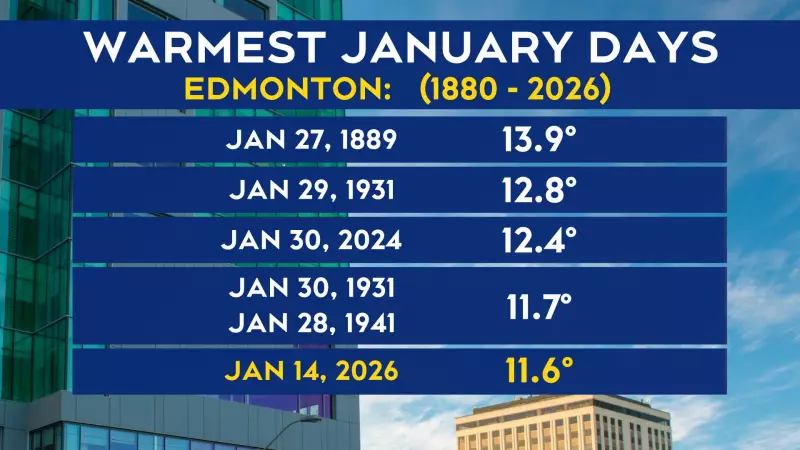
Residents of Edmonton enjoyed an unseasonably mild day this week, as the city recorded one of the warmest January temperatures in its history. The event, noted by meteorologists, adds to a growing list of atypical weather patterns observed across the region.
A Historic Warm Spell in Deep Winter
The significant temperature spike occurred on Wednesday, January 14, 2026. While the exact high was not specified in the initial report, the characterization of it as "one of Edmonton's warmest January days on record" places it among a select few extreme events. Meteorologist Josh Classen highlighted the anomaly, drawing public attention to the unusual climatic conditions.
Such warmth in mid-January is far from the norm for Alberta's capital, which typically experiences frigid conditions and consistent snow cover during this period. The event prompted discussions among locals and climate observers alike about the shifting patterns of winter weather.

Context and Broader Climate Trends
This record-warm day in Edmonton does not exist in isolation. It aligns with broader environmental trends, including the recent report that last year was the third warmest on record globally. Scientists have been closely monitoring how these global shifts manifest in Canadian regions, from thawing permafrost in the north to altered precipitation patterns.
While a single warm day is not definitive proof of climate change, it contributes to a larger dataset that experts analyze. These anomalies can have cascading effects, impacting everything from local ecosystems and wildlife behavior to infrastructure designed for colder temperatures.
Local Reactions and Looking Ahead
The immediate reaction in Edmonton was likely a mixture of enjoyment and concern. A break from harsh winter cold can be a welcome respite, but it also raises questions about long-term seasonal stability. The city's services, from road maintenance to energy grids, are calibrated for typical winter conditions, and extreme deviations can pose challenges.
As climate research continues, events like this warm January day become critical data points. They underscore the importance of adaptive planning for cities across Canada. The focus now turns to whether this was a rare outlier or a sign of more frequent mild interruptions to Edmonton's famously cold winters.
Environment Canada and local forecasters will continue to monitor conditions, as the remainder of the winter season unfolds.