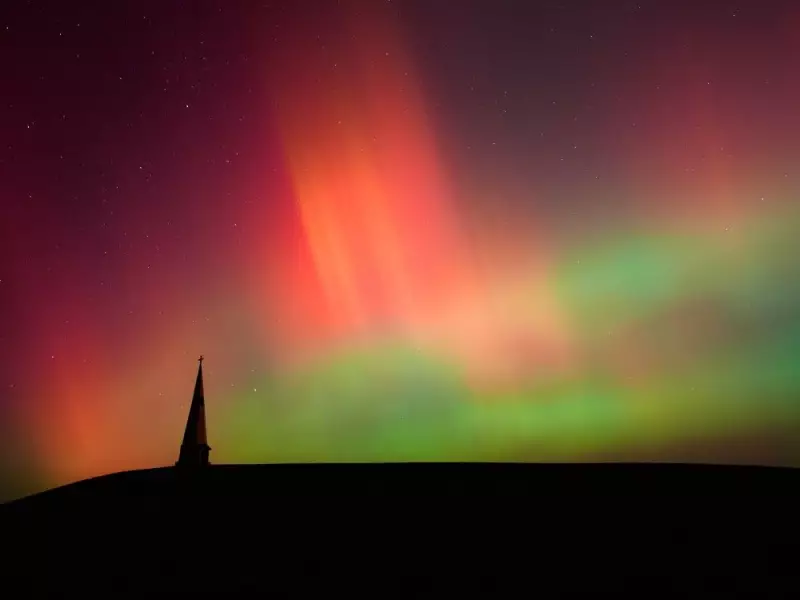
The night sky across Canada transformed into a breathtaking canvas on Tuesday, November 12, 2025, as the northern lights delivered an unforgettable performance of shimmering colours and dynamic patterns.
Social media platforms were flooded with stunning images and videos from Canadians from coast to coast, capturing the aurora's spectacular display of red, pink, green, blue, and purple hues. The celestial show was visible to millions, and forecasters are now predicting that Wednesday evening's display could be even more intense and widespread.
What Creates the Northern Lights Phenomenon?
Scientifically known as the aurora borealis, this spectacular light show occurs when electrically charged particles from the sun collide with gases in Earth's upper atmosphere. Our planet's magnetic field safely deflects these solar winds, preventing the kind of atmospheric stripping that left Mars barren.

While typically visible mainly in Arctic regions, increased solar activity can make the lights visible much further south, as demonstrated by Tuesday's widespread display across Canada and into the United States.
Understanding the Colour Spectrum
The variety of colours in auroral displays depends on the type of gas molecules involved and their altitude in the atmosphere. Oxygen produces the most common green auroras at altitudes between 100 and 300 kilometres, while higher up (300-400 kilometres), the same element creates stunning red displays.
Nitrogen molecules are responsible for the pink and dark red hues seen around 100 kilometres above Earth. The more elusive blue and purple auroras occur when hydrogen and helium interact with solar energy, though these colours are often more challenging to see with the naked eye.
How to Best Experience the Light Show
For those hoping to catch Wednesday's anticipated display, location is crucial. The further north you are, the better your chances of witnessing the phenomenon, though during periods of intense solar activity like the current one, southern regions may also enjoy the spectacle.
Experts recommend seeking out dark locations away from city light pollution for optimal viewing. Clear skies are essential, as cloud cover can completely obscure the display. Even a bright full moon can diminish the visibility of the more subtle colours.
Photography enthusiasts can capture the lights more vividly than the human eye typically perceives them. Using a tripod for stability and exposures between 10 and 25 seconds will yield the best results, though fast-moving auroras may still produce some blurring in photographs.
As Canadians look to the skies Wednesday evening, the potential for an even more brilliant display promises another opportunity to witness one of nature's most magnificent performances.