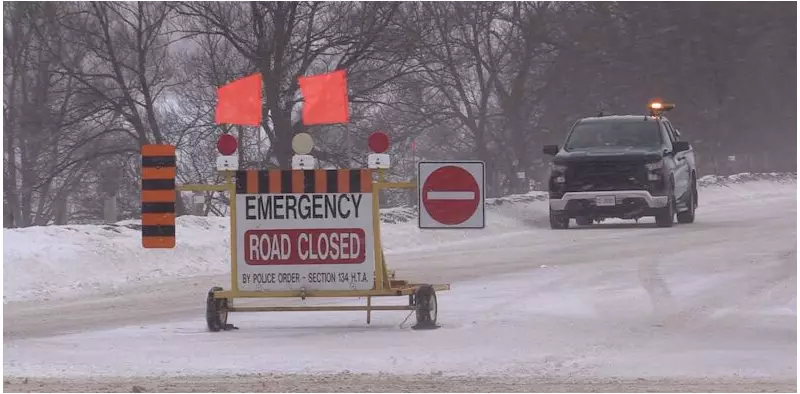
Intense snow squalls sweeping across midwestern Ontario have prompted a widespread shutdown of highways and secondary roads, creating hazardous travel conditions on December 30, 2025. Authorities are pleading with motorists to obey closure signs and not attempt to bypass barricades.
Widespread Disruption Across the Region
The sudden and severe weather event has resulted in a blanket of road closures throughout the region. Visibility has dropped to near-zero in many areas due to heavy, blowing snow, making travel extremely dangerous. The closures are a proactive safety measure by transportation officials and local police forces, including the Ontario Provincial Police (OPP), to prevent accidents and strandings.
Scott Miller of CTV News London reported from the scene, highlighting the rapid deterioration of conditions. The message from officials is unequivocal: "Please do not go around that sign." Ignoring closure signs not only puts the driver at extreme risk but also endangers first responders who may need to conduct a rescue.

Official Warnings and Public Advisories
Weather alerts remain in effect, warning of continued snow squall activity that can cause whiteout conditions and rapid snow accumulation. The public is advised to check official sources for the latest closure information before considering any travel. These sources include the Ministry of Transportation's (MTO) road condition website and local police social media channels.
Incidents of drivers disregarding closures have already been reported. The South Bruce OPP noted an instance where a bus driver was stopped hours apart for driving on a closed highway, underscoring the persistent danger and the need for compliance.
Broader Impact and Safety Recommendations
The road closures are part of a larger pattern of severe winter weather affecting parts of Ontario and Quebec. The situation serves as a stark reminder of the power of Canadian winter storms. For those who must travel, officials recommend having a full winter survival kit in the vehicle, including blankets, food, water, and a fully charged phone.
The primary advice remains to avoid non-essential travel until the squalls pass and road crews have had a chance to clear and reopen routes safely. Staying off the roads allows plow and emergency vehicles to operate effectively and protects all road users from preventable harm during this severe weather event.