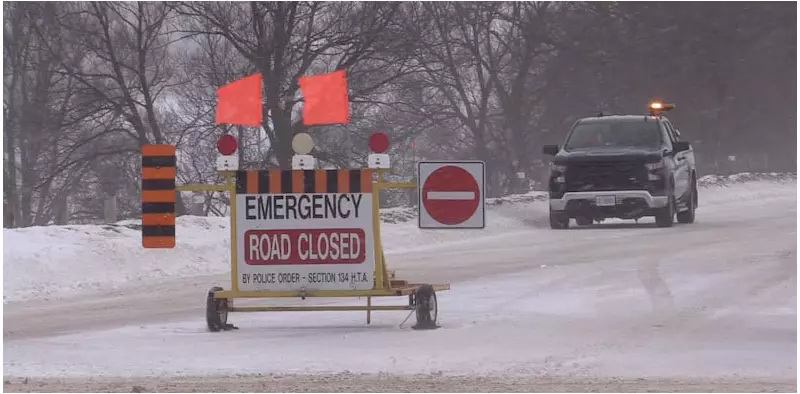
Midwestern Ontario residents are facing a hazardous start to the New Year's Eve holiday as stationary snow squalls continue to blanket the region with heavy snow. The persistent bands of intense snowfall have led to significant accumulation and forced the closure of multiple key roadways, creating dangerous travel conditions.
Road Closures and Travel Disruptions
The most significant impact has been on transportation networks. Highway 21 between Kincardine and Goderich remains closed due to the severe weather and poor visibility caused by the squalls. Local authorities have also shut down Bruce Road 3 from Highway 9 to Bruce Road 1. These closures are a direct response to the near-zero visibility and rapid snow accumulation on pavement, which make driving extremely perilous.
While a snow squall warning for the London, Ontario area was lifted earlier, the aftermath continues to disrupt travel. Officials are urging drivers to avoid non-essential trips in the affected zones. The situation serves as a stark reminder of how quickly conditions can deteriorate during a lake-effect snow event, which is precisely what these stationary squalls represent.

Weather Pattern and Accumulation
The snow squalls, which began impacting the region on December 30, 2025, have been remarkably persistent. Unlike fast-moving storms, these squalls have remained nearly stationary over parts of midwestern Ontario, leading to highly localized but intense snowfall. This phenomenon is typical of lake-effect snow generated by cold air moving over the relatively warmer waters of Lake Huron.
Areas under the most persistent bands have seen snowfall rates of several centimeters per hour. The total accumulation varies greatly over short distances, with some communities receiving far more snow than others just a few kilometers away. This uneven distribution is a hallmark of snow squall events.
Safety Advice and Broader Context
Police and transportation officials are repeating a clear message: if you do not need to travel, stay home. For those who must venture out, ensuring a winter survival kit is in the vehicle is critical. This kit should include blankets, food, water, a flashlight, and a fully charged phone.
The disruptive weather in Ontario coincides with other major winter events across Canada. A blizzard is bearing down on northern Manitoba, and freezing rain in Quebec has driven emergency medical calls to a near-record high. This pattern underscores a volatile and active winter weather season for much of the country as 2025 comes to a close.
As clean-up efforts begin in some areas, the focus remains on safety. Drivers are advised to continue checking the latest road conditions from official sources like Ontario 511 before any travel plans on this New Year's Eve.