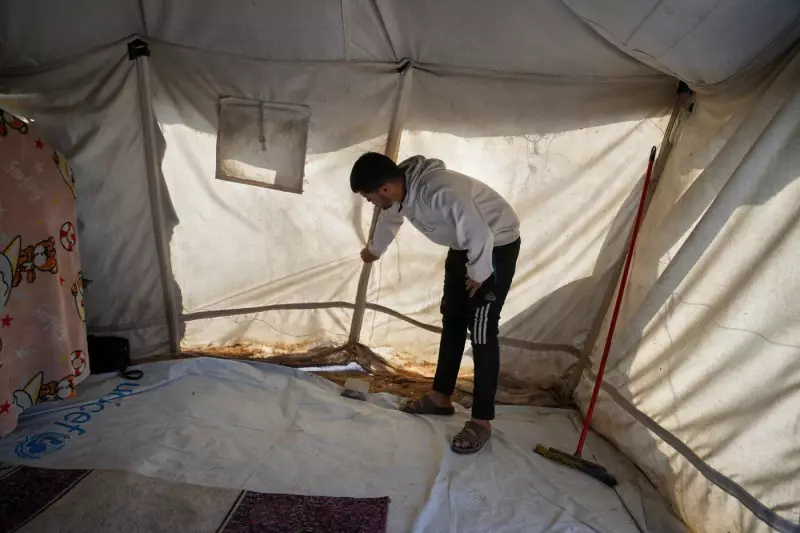
The first major winter storm of the season has battered the Gaza Strip, bringing torrential rains that have destroyed makeshift shelters and created catastrophic conditions for displaced Palestinians already struggling amid ongoing conflict.
Shelters Washed Away in Deir al-Balah
In the coastal city of Deir al-Balah, located in the central Gaza Strip, the powerful storm surge and heavy rainfall on Saturday, November 15, 2025, completely overwhelmed temporary camps established on the beach. Muhannad Abu Muharib, a 27-year-old Palestinian, was photographed desperately trying to reinforce his damaged tent after the storm ripped through the encampment.
The AP images captured the devastating scene of families attempting to salvage their few remaining possessions from flooded shelters. The temporary structures, which had provided minimal protection from the elements, proved no match for the season's first major winter weather system.

Compounding an Existing Humanitarian Catastrophe
The destructive rains have dramatically worsened what was already one of the world's most severe humanitarian crises. Families displaced by the ongoing Israel-Hamas conflict now face additional threats from exposure to cold, wet conditions with limited access to adequate shelter, warm clothing, or heating sources.
Medical professionals in the region have expressed grave concerns about the health implications of the storm, particularly for vulnerable populations including children, elderly residents, and those with pre-existing medical conditions. The combination of crowded living conditions, inadequate sanitation facilities, and now flooding creates ideal conditions for waterborne diseases to spread rapidly.
Long-Term Implications for Displaced Populations
As winter sets in across the region, humanitarian organizations warn that the situation could deteriorate further without immediate intervention. The destruction of these makeshift shelters leaves thousands of people without any form of protection from the elements during what meteorologists predict will be a particularly harsh winter season.
The timing of this storm could not be more devastating for Gaza's displaced population, many of whom have already been displaced multiple times throughout the conflict. With reconstruction efforts hampered by ongoing hostilities and limited access to building materials, the prospects for establishing more durable shelter before the worst of winter arrives appear increasingly bleak.
International aid agencies are racing against time to deliver emergency winterization supplies, including plastic sheeting, blankets, and warm clothing, though access restrictions continue to complicate relief efforts in the besieged territory.