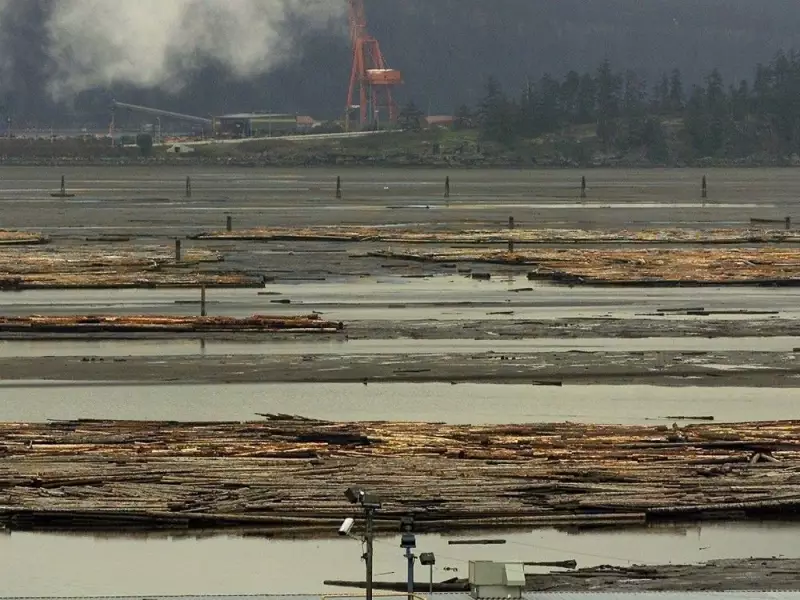
A groundbreaking new study has sounded the alarm on an environmental crisis unfolding along the rugged coastline of British Columbia. Research published in the journal Marine Ecology reveals that drift logs, carried by tides and waves, are causing severe and widespread damage to vital rocky shore intertidal zones.
A Centuries-Long Accumulation with Modern Consequences
The study, which utilized modern satellite imagery alongside historical photographic analysis, presents a stark picture of escalating accumulation. Scientists examined 202 sites along the B.C. coast, finding an average of 311 logs per kilometre on sandy shores and 194 logs per kilometre on rocky shores.
One particularly impacted rocky site recorded a staggering 1,238 logs in a single kilometre. Overall, researchers estimate there are approximately 450,000 drift logs littering the Vancouver Island coast alone.

The historical analysis is even more telling. The report states that comparisons with archival photographs show a 520 per cent increase in drift log abundance since the late 19th century. When extrapolated to the period before European settlement, the increase is estimated to be a colossal 800 per cent.
"These trends correlate directly with the expansion of forestry operations over the past century," the study authors note, estimating that 80 per cent of drift logs on the coast are related to logging activities.
The Grinding Destruction of Marine Habitats
The ecological damage is not from the mere presence of the logs, but from their relentless motion. The logs, lifted and dropped by daily tides, grind against rocky shores, scouring away delicate marine life. This abrasive action has devastating consequences for intertidal communities.
The research found that the abundance of barnacles—a crucial food source for many species—was significantly lower in areas exposed to log grinding compared to protected crevices spared from the abrasion.
While the destructive effect was first identified as far back as 1971, the study laments that the issue "has received little further attention despite its ecological and conservational significance" until now.
Cascading Effects and a Call for Urgent Action
The degradation caused by the logs extends far beyond the immediate shoreline. The study warns that the loss of these intertidal communities "likely has cascading negative effects on both aquatic and terrestrial species that depend on these habitats for foraging."
The conclusion of the researchers is unequivocal: a major reduction in the number of drift logs is essential to reverse the ongoing destruction of B.C.'s rocky shore intertidal ecosystems.
In response to the growing problem, the provincial government is promoting a shift in logging practices. It is encouraging the use of barges for transporting and storing logs, moving away from traditional log booms that are prone to breaking apart during storms and releasing their cargo into the marine environment.
The findings underscore a critical and long-overlooked intersection between industrial forestry and marine conservation, highlighting the urgent need for mitigation strategies to protect British Columbia's iconic and biodiverse coastline.