Provincial Government Commits $20 Million to Upgrade Windsor's Stormwater System
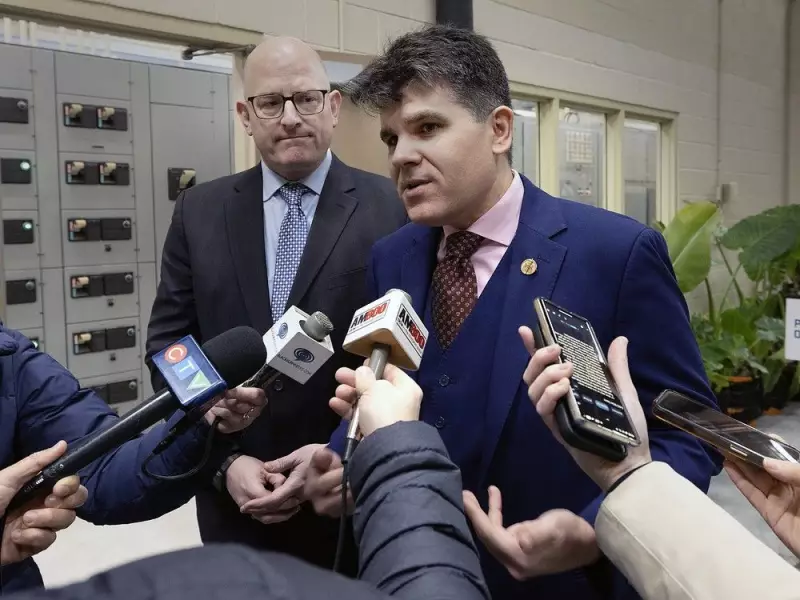
Windsor, Ontario – In a significant move to address chronic flooding issues, the Ontario government has announced nearly $20 million in funding for stormwater infrastructure upgrades in east Windsor. The announcement was made on Friday, January 23, 2026, by MPP Andrew Dowie (PC – Windsor-Tecumseh) during a media event at the Pontiac Pumping Station.
Targeting a Flood-Prone Neighborhood
The substantial investment is specifically designated for the Pontiac Stormwater Pumping Station drainage area, a residential neighborhood located south of Sand Point Beach that has historically experienced severe basement flooding during heavy rainfall events. This funding represents a critical step toward protecting residential properties and improving community resilience against increasingly frequent extreme weather patterns.
"I'm happy that we haven't seen a flood in the last couple of years, but we know there will be a day when we will get another heavy weather event," stated MPP Dowie during the announcement. "It's vital that we be protected from that, and do what we can to protect people's property. We cannot forget what's happened in the past, and we have to keep improving."

Addressing Historical Flooding Damage
The need for these infrastructure improvements is underscored by recent history. Two major storms in September 2016 and August 2017 caused massive flooding throughout the region, resulting in insured losses totalling approximately $300 million. Following both weather events, water-damaged items from east Windsor residents' flooded basements lined curbsides throughout affected neighborhoods.
This provincial funding comes from the Municipal Housing Infrastructure Program's Health and Safety Water Stream, which allocates $875 million across Ontario to support access to safe drinking water, housing development, job creation, and protection against extreme weather events.
Municipal Collaboration and Long-Term Planning
Windsor Mayor Drew Dilkens, who joined MPP Dowie for the announcement, emphasized the longstanding priority of addressing the city's stormwater management challenges. "There wasn't one hand on successive city councils from 2010 onward who said this isn't a priority," Mayor Dilkens noted. "Everyone is seeing the change and the climate events that are happening."
The provincial funding will support implementation of Windsor's comprehensive sewer master plan, a multi-generational $4.9-billion initiative approved by city council in 2020. This ambitious plan includes extensive trunk sewer replacement work that will be significantly advanced through the newly announced provincial contribution.
Historical Infrastructure Challenges
Mayor Dilkens contextualized the current infrastructure needs within Windsor's historical development. When the City of Windsor formed through amalgamations in 1935 and expanded further in 1966, "we didn't inherit the type of infrastructure that was meant to handle the type of growth that we're seeing, or the type of weather changes that we're seeing."
"We have to put together a city standard that actually allows us to meet the modern issues that we're dealing with, but also allows us to grow," the Mayor explained. "This is what this project does."
Municipal Contribution and Project Scope
The City of Windsor will complement the provincial investment with a $7.6 million contribution through the East Marsh Drainage Redirection project. This collaborative funding will support infrastructure work across multiple key corridors in east Windsor:

- Florence Avenue from Wyandotte Street East to Riverside Drive East
- Menard Street from Florence Avenue to Elinor Street
- Clover Street from Clairview Avenue to Wyandotte Street East
- Clairview Avenue from Clover Street to Adelaide Avenue
- Elinor Street from Clairview Avenue to Wyandotte Street East
- John M Street from Clairview Avenue to Menard Street
- Clairview Avenue from Clover Street to Florence Avenue
This substantial investment in Windsor's stormwater infrastructure represents a proactive approach to climate adaptation, aiming to protect residents' properties while building long-term resilience against the increasing frequency and intensity of extreme weather events affecting communities across Ontario.