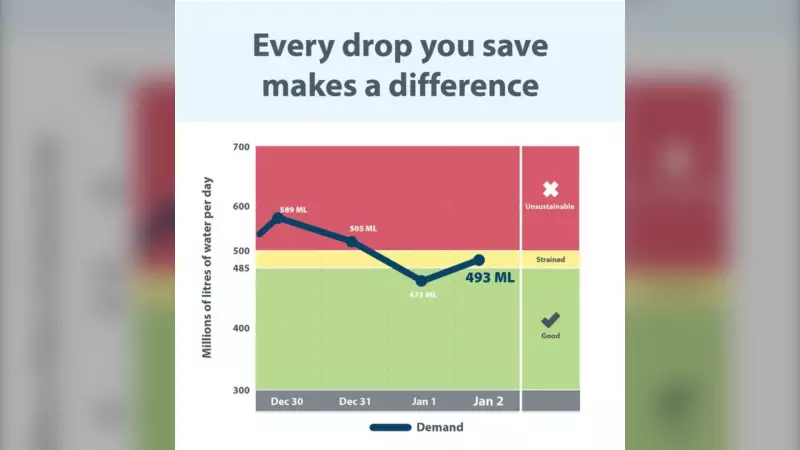
Calgary's water consumption surged to a concerning level on Friday, pushing the city's supply system to its limits. Officials reported that daily usage reached 493 million litres, significantly above the threshold considered sustainable for the municipal network.
Consumption Exceeds Critical Threshold
City authorities have repeatedly stated that using more than 485 million litres per day places a heavy strain on Calgary's water supply infrastructure. The recorded consumption of 493 million litres on Friday, January 3, 2026, clearly surpassed this critical mark, prompting renewed calls for public vigilance and conservation efforts.
Officials Sound the Alarm
The data, released by the City of Calgary, has triggered immediate concern among municipal leaders. The consistent message from officials is that exceeding the 485-million-litre benchmark is not a minor issue; it directly stresses the pipes, treatment facilities, and reservoirs that deliver safe, clean water to every home and business in the city.

While the specific cause of Friday's spike was not detailed in the initial report, such increases are often linked to a combination of factors that can include:
- Unusual residential or commercial use.
- System maintenance or operational requirements.
- A lag in public response to earlier conservation appeals.
The Path Forward: Conservation is Key
This latest data point serves as a stark reminder of the fragility of urban water systems, even in a major Canadian city. Calgary officials are expected to reinforce their calls for reduced water use. For residents, this means adhering to any active water use guidelines and proactively adopting water-saving habits in daily life.
The incident underscores the ongoing challenge of balancing growing urban demand with the finite capacity of water treatment and distribution systems. As Calgary continues to grow, managing this essential resource will remain a top priority for municipal planners and engineers.