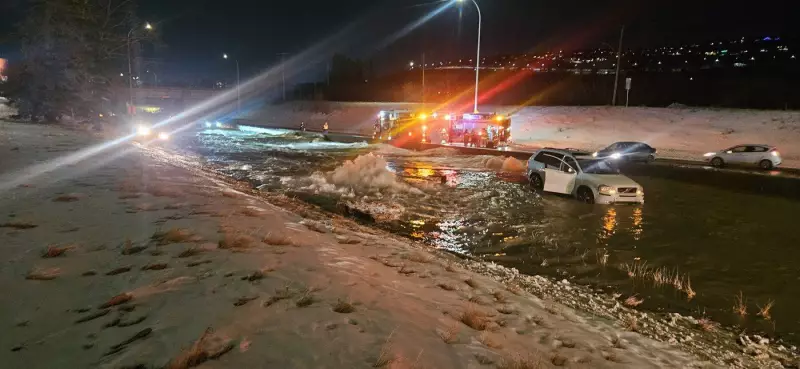
The massive effort to repair Calgary's catastrophic water main break is entering its final stretch, with city officials confirming that two critical phases of the project are now complete. The rupture of the Bearspaw South Feeder Main on December 30, 2025, sent torrents of water flooding a major highway, marking the start of a complex and urgent infrastructure crisis.
A Catastrophic Failure and Immediate Response
The incident began on Tuesday, December 30, 2025, when the critical Bearspaw South Feeder Main ruptured. Dramatic handout photos captured by Ian Royer and released by The Canadian Press showed firefighters staged along a flooded highway as the broken pipe spewed water. This vital piece of infrastructure failure immediately threatened the city's water supply and transportation network, triggering a large-scale emergency response.
City crews and contractors have been working around the clock since the break occurred. The repair strategy was divided into multiple phases to methodically address the damage, ensure structural integrity, and prevent future failures. The completion of the first two phases represents a significant milestone, bringing the city closer to fully restoring normal water service and pressure to all affected areas.

The Road to Recovery and System Restoration
While officials have not provided an exact date for full completion, the progress indicates the most challenging parts of the physical repair are likely over. The remaining work involves final testing, backfilling, site restoration, and comprehensive system checks. Each step is crucial to ensure the long-term reliability of the feeder main, which is a key artery in Calgary's water distribution system.
The break served as a stark reminder of the age and vulnerability of municipal infrastructure across Canada. The swift flooding of the highway underscored how quickly a single point of failure can disrupt essential services and public safety. The repair process has undoubtedly involved specialized engineering, precise welding, and rigorous pressure testing to meet modern standards.
Looking Ahead: Infrastructure Resilience
As Calgary nears the end of this emergency repair, questions about preventative maintenance and infrastructure investment will remain. Events like the Bearspaw main break prompt municipal governments to re-evaluate the condition of other critical assets, from water and sewer lines to bridges and roads.
The successful progression through the repair phases offers reassurance to Calgary residents and businesses that the situation is under control. However, the incident highlights an ongoing national challenge: the need for sustained investment to upgrade aging public works systems before they fail catastrophically. The lessons learned from this event will likely influence infrastructure planning and emergency preparedness protocols in Calgary and other Canadian cities for years to come.