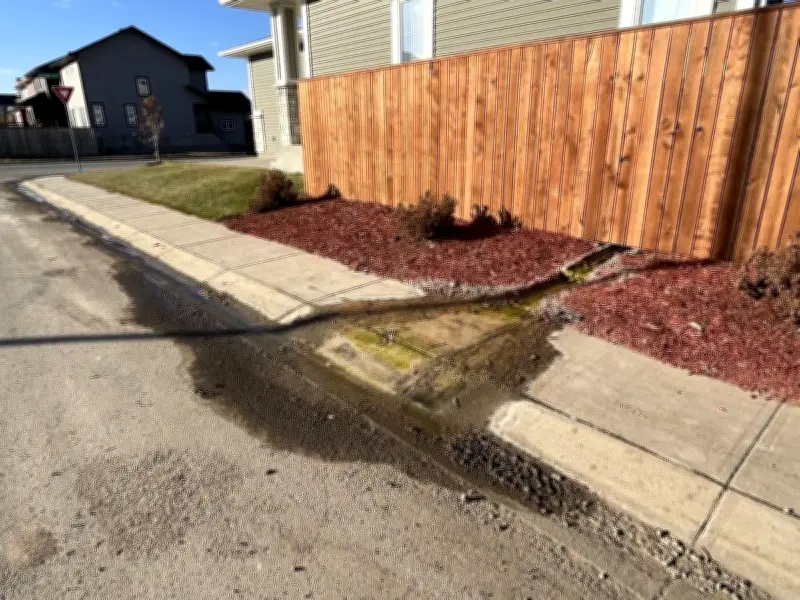
Saskatoon residents in newer neighbourhoods like Brighton and Rosewood are grappling with a persistent groundwater problem that keeps sump pumps running for months on end, leading to soggy lawns, icy sidewalks, and concerns about pump failure.
Groundwater woes plague Saskatoon homes
Vanessa Heilman, principal geotechnical engineer with Saskatoon Water, told the city’s environmental advisory committee that sump pump concerns now account for about half of the issues handled by the city’s drainage bylaw team. “What we seem to be doing of late is constructing basements into the groundwater,” Heilman said.
The problem has escalated over the past five years, particularly in Brighton and Rosewood, with similar issues in Hampton Village, Evergreen, and Willowgrove. Residents report soggy yards, bad smells from soaked grass, slippery algae in summer, and icy sidewalks in winter, along with anxiety about pump failure.

City weighs solutions for future homes
The city is considering measures for new developments, including additional drainage pipes, earlier groundwater testing, and alternative land uses. A city survey last summer received 846 responses: 137 reported pump failure problems, 54 had winter backup issues, and seven reported summer backups. Heilman noted the survey did not capture the full scale.
Discharged water is also damaging park spaces, killing grass, and increasing the need for mosquito treatment. Some buyers are now asking about groundwater before purchasing in Brighton, but Heilman said some data belongs to developers and cannot always be shared.
Expert warns of sump pump risks
Grant Ferguson, a professor at the University of Saskatchewan’s School of Environment and Sustainability, said a continuously running sump pump is a red flag. “Sump pumps should only be operating during extreme weather events,” he said. “They’re not designed to be running 24/7 for months at a time.”
Homes fully dependent on sump pumps are vulnerable to failure, freezing, or power loss. “You go away for the weekend and suddenly your sump pump fails and you come back and your basement’s full of water,” Ferguson added.
Policy change contributed to problem
Heilman traced part of the issue to a 2004 policy change that banned connecting home drainage to the sanitary sewer system. Previously, such connections caused sewer overflows and basement backups during heavy storms. Now, water must be pumped outside, but in high-groundwater areas, that means continuous discharge.
The city is reviewing how new homes are built in high-groundwater areas to prevent further problems. Residents and officials alike are calling for better data sharing and proactive planning to address the growing concern.