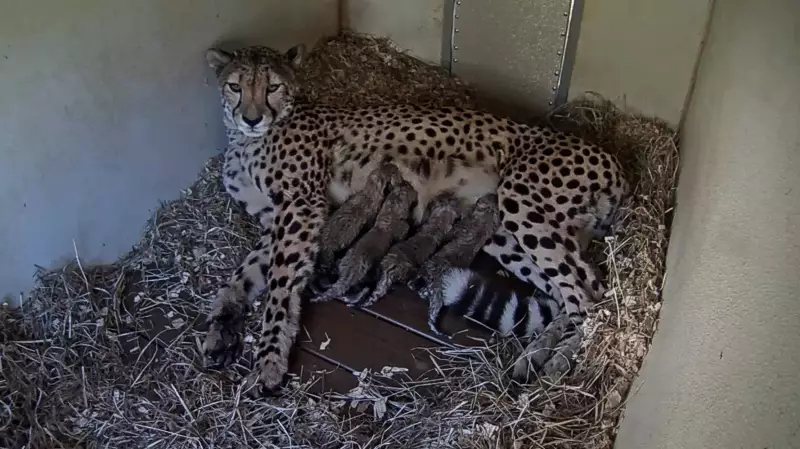
The Smithsonian's National Zoo and Conservation Biology Institute has celebrated a significant conservation achievement with the birth of four healthy cheetah cubs last month. The remarkable births occurred during a challenging period for the institution, yet the newborn cats are thriving under their mother's care.
A Milestone Birth for Cheetah Conservation
The four cheetah cubs were born on October 17 and 18 at the conservation facility in Front Royal, Virginia. According to zoo officials, the young cheetahs appear to be in excellent health, displaying strength, activity, and healthy vocalizations while eating well. Their mother, Amabala, a first-time parent, has been providing exceptional care to her new offspring.
This birth represents a major milestone for the conservation program, marking the 20th litter born at the Front Royal facility since 2010. Even more notably, this is the fifth litter to be born on camera through the popular "Cheetah Cub Cam" program. The same live camera feed documented Amabala's own birth back in 2020, creating a special full-circle moment for the conservation team.

The Challenges of Cheetah Reproduction
Adrienne Crosier, the carnivore biologist who leads the cheetah species survival plan at the facility, explained the difficulties involved in cheetah breeding. "Cheetahs can be challenging to breed, in part because female reproductive cycles can be sporadic and their behavior is often very difficult to interpret," Crosier stated.
She emphasized the tremendous effort required from the entire team, noting that thousands of man-hours from keepers, veterinary staff, and biologists were necessary to produce these 20 litters. The fact that Amabala, who was born at the same facility, has now successfully delivered her own litter makes this achievement particularly meaningful for the conservation program.
Hands-Off Approach to Maternal Bonding
The conservation staff has adopted a carefully monitored but hands-off approach to allow Amabala to properly bond with her cubs without human interference. While keeping a watchful eye through the Cheetah Cub Cam, the team is giving the new mother space to develop natural maternal behaviors.
As with typical cheetah behavior in the wild, the father—an 8-year-old male named Flash who also resides at the facility—is not involved in raising the cubs. This reflects natural cheetah social structure where males typically have no role in cub rearing.
Animal lovers and conservation enthusiasts can follow the cubs' development through the Cheetah Cub Cam available on the National Zoo's website. The zoo notes that viewers might occasionally find the den empty as Amabala naturally moves her cubs around her habitat, which is normal maternal behavior for cheetahs.