Injured Seabird's Unusual Cry for Help at Hospital Door Leads to Rescue
In a remarkable display of animal instinct, an injured seabird found an unconventional way to seek medical attention in Bremen, Germany. On Sunday, February 15, 2026, a cormorant, visibly hurt, was observed pecking persistently at the door of an emergency room at a local hospital. The bird's unusual behavior quickly drew attention, prompting a swift response from emergency services.
Firefighters Step In for Unlikely Rescue Mission
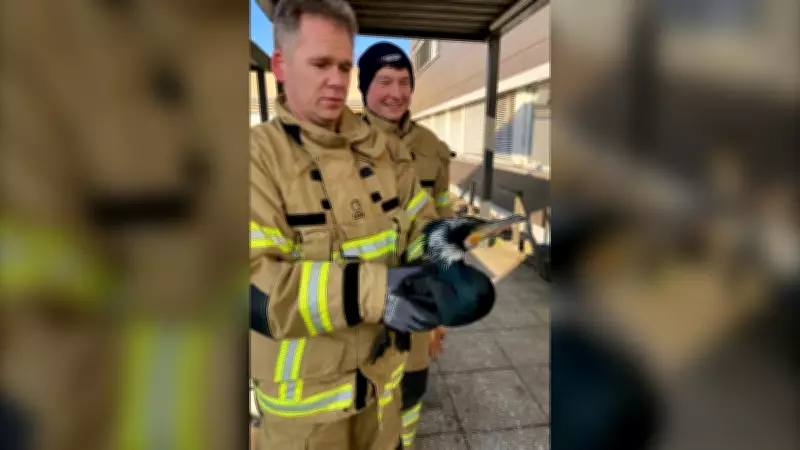
The Bremen Fire Department was called to the scene, where firefighters carefully handled the distressed cormorant. Photographs from the incident show a firefighter gently holding the bird, which appeared calm despite its injuries. The rescue operation underscores the diverse roles that fire departments often play in urban environments, extending beyond traditional firefighting to include animal welfare emergencies.
While the exact nature of the cormorant's injuries was not immediately disclosed, wildlife experts suggest that such behavior is rare but not unheard of. Seabirds, when disoriented or in pain, may seek out human structures in desperation, particularly in coastal cities like Bremen where urban and natural habitats intersect.

Broader Context of Urban Wildlife Encounters
This incident highlights the increasing frequency of human-wildlife interactions in urban settings. As cities expand into natural habitats, animals like cormorants are forced to adapt, sometimes with dramatic consequences. The Bremen case serves as a poignant reminder of the challenges faced by wildlife in navigating human-dominated landscapes.
- Urbanization pressures continue to displace native species, leading to more frequent encounters.
- Emergency services across many cities now train for animal rescue scenarios, reflecting growing awareness.
- Public awareness campaigns often encourage residents to report injured wildlife rather than intervene directly.
Following the rescue, the cormorant was likely transferred to a wildlife rehabilitation center for treatment and eventual release. Such facilities play a crucial role in mitigating the impacts of urban development on local fauna.
Reflections on Animal Behavior and Human Response
The bird's decision to peck at a hospital door—a symbol of human medical care—adds a layer of symbolism to the event. It raises questions about animal cognition and their perception of human environments as potential sources of aid. While anthropomorphizing animal behavior should be approached cautiously, this incident undeniably showcases a survival instinct that resonated with human onlookers.
In conclusion, the injured cormorant's plea for help at a Bremen hospital door not only led to its own rescue but also sparked conversations about coexistence between humans and wildlife in modern cities. As urban areas continue to grow, such encounters may become more common, necessitating continued preparedness and compassion from community services.