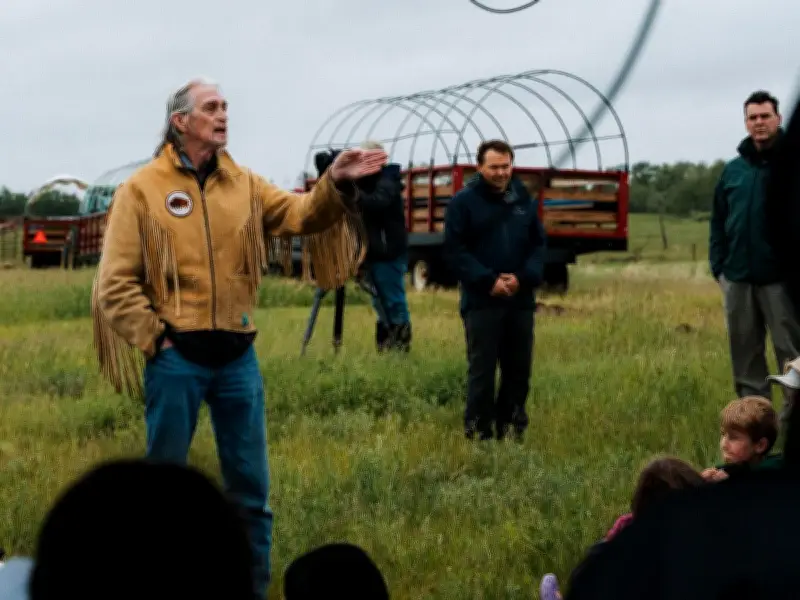
Sixteen bison calves born at Batoche this spring have officially received their names during a ceremony that brought together Métis youth, elders, and community members. Métis Nation-Saskatchewan (MN-S) hosted the event on the Batoche festival grounds, inviting students from surrounding Michif language schools to participate.
Youth Involvement in Bison Conservation
Darcy Lepowick, MN-S minister of environment, agriculture, lands and resources, emphasized the significance of including young people in the ceremony. “These youths are the future and they’re learning about the history and culture connected to the Métis people and from the Métis elders and the citizens here,” he said. “So they’re getting first-hand experience and they’re the ones that are going to be passing on the knowledge in the future.”
The event featured discussions on the history and traditions of bison in Métis culture, including the uses of buffalo, gestation periods, and the pemmican trade. Students also heard from elders who shared traditional knowledge.

Naming the Calves
The 16 calves, still sporting their newborn orange coats, are the first born on Batoche land in nearly 150 years. In preparation for the births, MN-S invited registered Métis youth across the province to submit name ideas, with selected winners receiving a $100 gift card. All final selections came from Michif French, Heritage Michif, and Northern Michif languages, though submissions also welcomed Cree and Dene names.
The list of names included Ci Boy (Tiny boy), Li noovoo (Newcomer), Shakwala (Chocolate), and Pchit pwelleu (Little Furry One).
Ceremony Highlights
The ceremony included taking attendees out to the paddock in trailers to view the buffalo and month-old calves. Lepowick noted that the students became so excited they accidentally scared the herd away. “As we were leaving, the buffalo ran around the paddock in front of all the trailers, so everyone got a better look that way,” he said.
Herd Growth and Future Plans
The herd currently numbers around 90 animals, a significant increase from the 25 buffalo given to MN-S from Parks Canada in 2023. Lepowick stated that the current paddock in Batoche is at capacity, but MN-S has plans to expand herds across the province. “The goal is that we’ll have nucleus herds that will go out to other regions, locals, important communities or groups within Métis Nation-Saskatchewan,” he said.
Broader Conservation Efforts
Bison conservation efforts in Saskatchewan began in 1972, when a herd was introduced to Buffalo Pound Provincial Park. Since then, Grasslands National Park, Wanuskewin Heritage Park, and Prince Albert National Park have all joined the efforts. According to Parks Canada, the herds are assessed every two years and reduced to maintain the natural ecosystems.