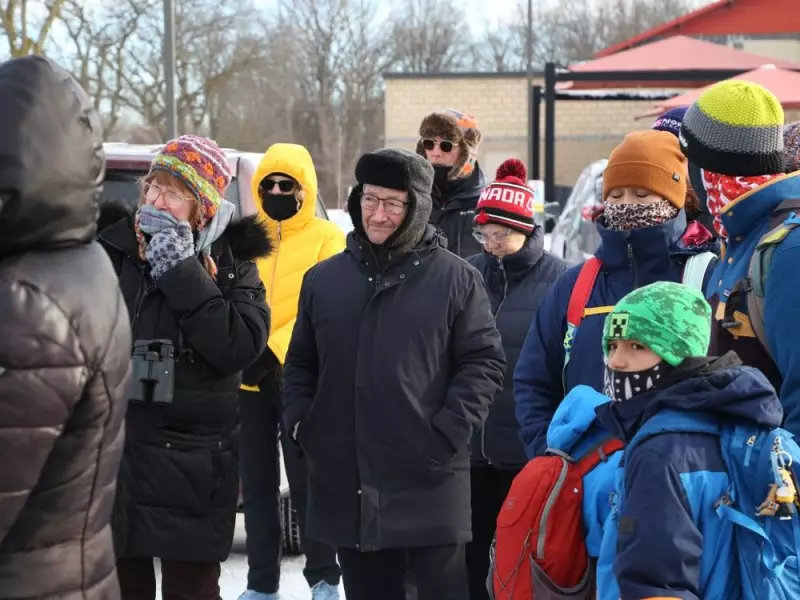
Instead of staying indoors on New Year's Day, a determined group of Windsor-Essex residents laced up their winter boots and embraced the frigid air for an educational adventure. On Thursday, January 1, 2026, more than 40 locals participated in a First Day Hike across one of the region's most significant environmental infrastructures: the massive wildlife eco-passage on the Rt. Hon. Herb Gray Parkway.
A Chilly Start to the New Year with Purpose
Led by local naturalists Laura Foy and Russ Jones, the hike offered participants a unique opportunity to explore and learn about the dedicated wildlife corridor that connects the Spring Garden Natural Area with Oakwood Bush in South Windsor. For Foy, who administers the Windsor-Essex Native Plant Gardening Facebook group, the event was the perfect antidote to the holiday season.
"The First Day Hike concept really appeals to me," Foy shared. "You can get out after the holidays, sort of shake off the cobwebs and appreciate nature." Despite the biting cold, she noted that the highlight was witnessing many participants discover the extensive trail network for the very first time.

Exploring Ontario's Largest Wildlife Crossing
The focus of the hike was the parkway's eco-passage, an engineering marvel designed for wildlife. According to the Ontario Ministry of Transportation (MTO), it is the largest structure of its kind in the province. The passage spans roughly 14,500 square metres—an area equivalent to about nine NHL hockey rinks—as it crosses over both Highway 401 and Highway 3.
This crossing is a critical component of a much larger green initiative. The entire Herb Gray Parkway corridor encompasses:
- More than 300 acres of managed green space.
- Over 20 kilometres of recreational trails.
- A diverse range of habitats including wetlands, hedgerows, grasslands, tall grass prairie, and perennial beds.
A Sanctuary for Species at Risk
The development of this area was conducted with stringent environmental protections. Under Ontario's Endangered Species Act, the Ministry of Natural Resources and Forestry issued permits to the MTO specifically for the protection of vulnerable species within the corridor.
The protected species include seven plants at risk, such as Colicroot and the Eastern Prairie Fringed-orchid, as well as two reptile species: the Eastern Foxsnake and Butler's Gartersnake. The eco-passage provides a safe route for these and other animals, preventing road fatalities and supporting local biodiversity.
Reflecting on the successful community event, Laura Foy expressed her gratitude to the hardy participants. "I can't think of a better way to have kicked off the New Year than with our First Day Hike," she said. "Thanks to the 40-plus people who put on their warmest long underwear and joined us." The hike demonstrated a strong community interest in local ecology and set a refreshing, nature-focused tone for the year 2026.